English

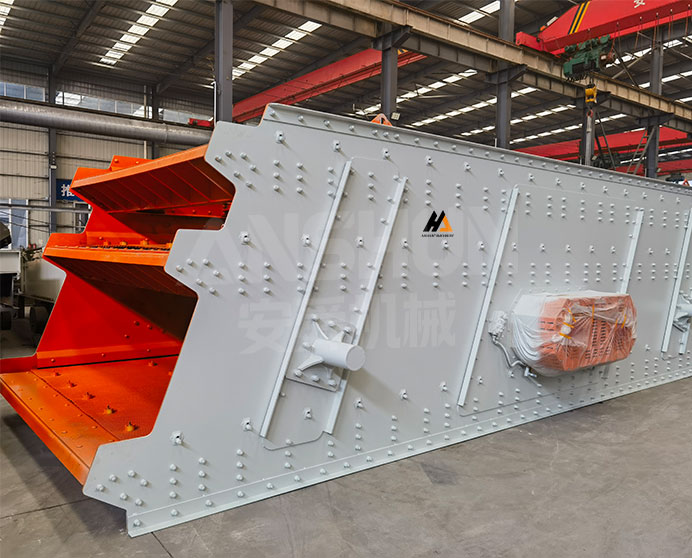
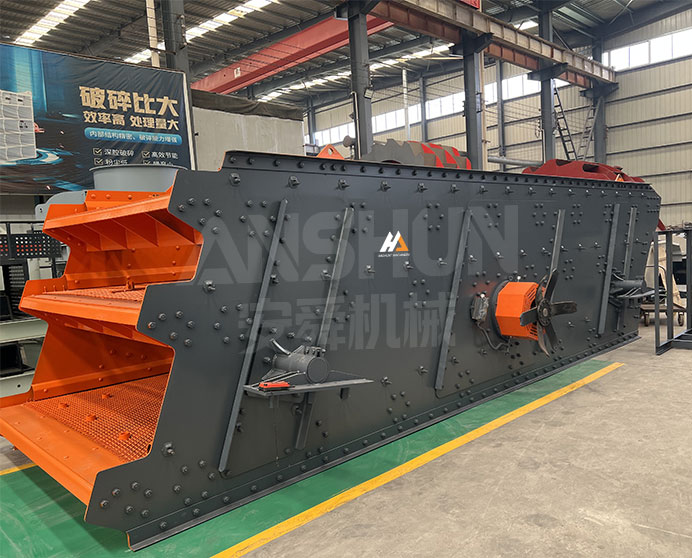
Vibrating Screen
Model: YK Series · Screening · Sand & Aggregate
-
Feed Size
≤100mm
-
Capacity
50-1400t/h
-
Power
15-90KW
- ISO9001
- CE
- EAC
We reply within 24 hours
Product Overview
What Is a Circular Vibrating Screen?
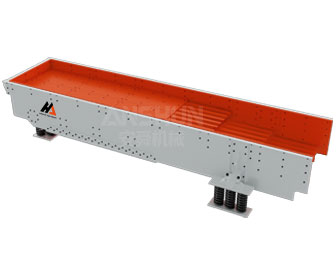
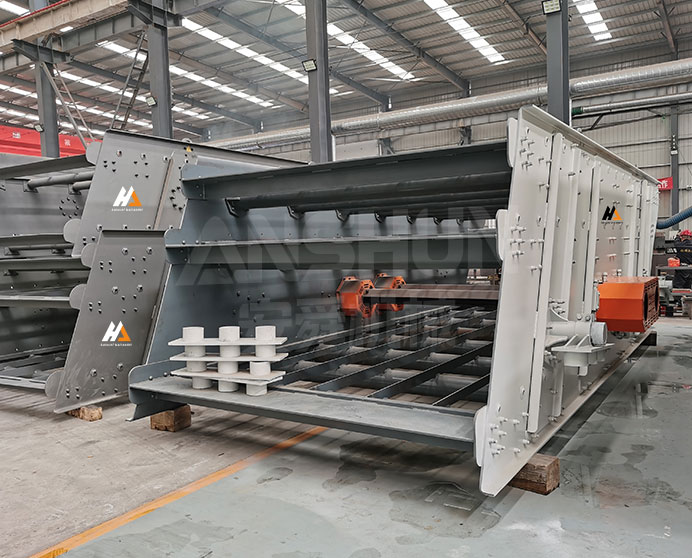
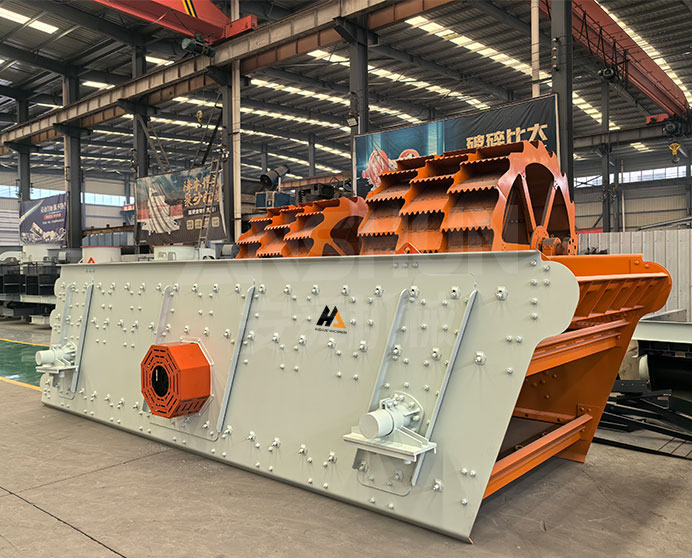
The YK circular vibrating screen is a multi-layer inclined vibrating screen in which the screen box traces a circular orbit under the action of an eccentric-block exciter. The circular motion gives material on the screen deck a combined forward-conveying and vertical-stratification action – coarse material rides on the upper layer and is conveyed to the oversize discharge; fine material stratifies downward and passes through the screen apertures. This motion is well-suited to dry and wet aggregate classification, ore sizing, and dewatering applications where a steep feed-through rate and resistance to blinding are required.
Eleven standard YK models cover screen widths from 1500 mm to 3600 mm and lengths from 4800 mm to 8000 mm, with two- and three-deck configurations, producing three or four product fractions simultaneously. Capacity ranges from 50 t/h on the smallest two-deck model (2YK-1548) to 1400 t/h on the largest three-deck model (3YK-3680). The YK is the standard circular vibrating screen in China’s aggregate, mining, coal, and quarry industries, and is manufactured with a series of structural and assembly upgrades – described below – that directly address the most common failure modes found on standard-grade competitors.
Applicable Materials
Granite, Basalt, Limestone, Quartzite, River gravel, Iron ore, Copper ore, Gold ore, Coal, Coke, Slag, Recycled concrete aggregate, Sand & gravel mix, Phosphate rock
Industries
Hard Rock Quarrying, Metal & Non-Metal Mining, Aggregate & Sand Production, Coal Preparation, Highway, Railway & Hydraulic Engineering, C&D Waste Recycling, Chemical & Industrial Minerals
Technical Specifications
|
Model |
Screen Spec (mm) |
Layers |
Screen Mesh Size(mm) |
Feed Size(mm) |
Capacity (t/h) |
Power(kw) |
Vibrating Frequency(hz) |
Double Amplitude |
|
2YK-1548 |
4800×1500 |
2 |
5-50 |
≤100 |
50-250 |
15 |
870 |
5-9 |
|
3YK-1848 |
4800×1800 |
3 |
5-50 |
≤100 |
50-250 |
18.5 |
870 |
5-9 |
|
3YK-1860 |
6000×1800 |
3 |
5-50 |
≤100 |
50-250 |
22 |
870 |
5-9 |
|
2YK-2160 |
6000×2100 |
2 |
5-50 |
≤100 |
60-300 |
22 |
730 |
5-9 |
|
3YK-2160 |
6000×2100 |
3 |
5-50 |
≤100 |
60-300 |
30 |
730 |
5-9 |
|
2YK-2460 |
6000×2400 |
2 |
5-100 |
≤100 |
100-460 |
37 |
730 |
5-9 |
|
2YK-2470 |
7000×2400 |
2 |
5-100 |
≤100 |
120-700 |
37 |
800-900 |
5-9 |
|
2YK-2870 |
7000×2800 |
2 |
5-150 |
≤100 |
150-1000 |
45 |
800-900 |
7-12 |
|
3YK-3070 |
7000×3000 |
3 |
5-150 |
≤100 |
180-1000 |
2×37 |
800-900 |
7-12 |
|
3YK-3075 |
7500×3000 |
3 |
5-150 |
≤100 |
210-1100 |
2×37 |
800-900 |
8-12 |
|
3YK-3680 |
8000×3600 |
3 |
5-150 |
≤100 |
350-1400 |
2×45 |
800-900 |
8-12 |
Key Features & Advantages
-
Eccentric-Block + Universal-Joint Drive - Balanced Axial Excitation
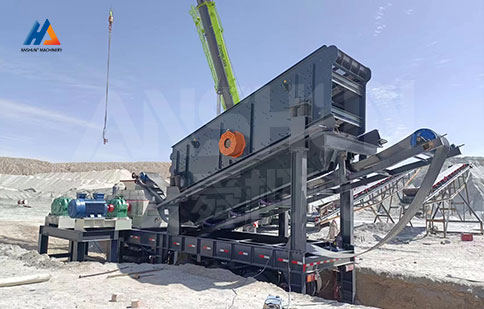
The YK circular vibrating screen uses an eccentric-block exciter coupled to the screen shaft via a universal joint (cardan shaft). This drive arrangement effectively cancels residual axial vibration forces that would otherwise be transmitted into the side-plate structure, reducing bearing load imbalance and extending bearing service life compared to direct-coupled eccentric-shaft designs. The universal joint also accommodates minor shaft misalignment during thermal expansion, preventing induced bending loads on the exciter bearings.
-
Q245R Boiler-Grade Side Plates & Reinforcement Panels
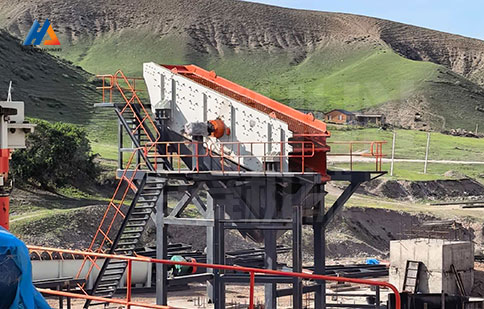
Both side plates and all reinforcement panels are fabricated from Q245R pressure-vessel (boiler) steel rather than the Q235 mild steel used in standard-grade screens. Q245R has a minimum yield strength of 245 MPa and, critically, significantly higher notch toughness and resistance to crack propagation than Q235. In high-amplitude, high-cycle fatigue applications such as vibrating screens, this material choice prevents the progressive tearing and plate cracking that leads to catastrophic side-plate failure - the most common structural failure mode on competing machines.
-
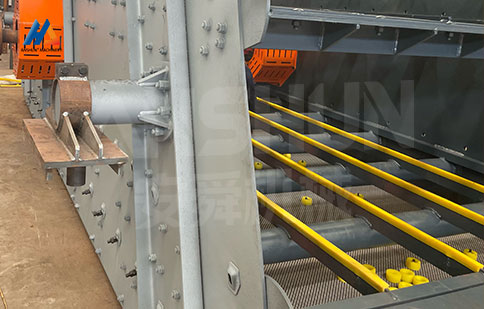
CNC-Milled & Annealed Cross-Beam Tubes
The structural cross-beams that connect the two side plates are square-section steel tubes with both end faces precision-milled on a CNC machining center to ensure full, even contact with the side-plate mating surfaces. After welding, the beam assemblies are stress-relief annealed to eliminate residual weld stresses. The combination of full end-face contact and a stress-free weld zone maximizes the load-transfer efficiency of each cross-beam joint, raising the overall stiffness and fatigue life of the screen box under resonant vibration.
-
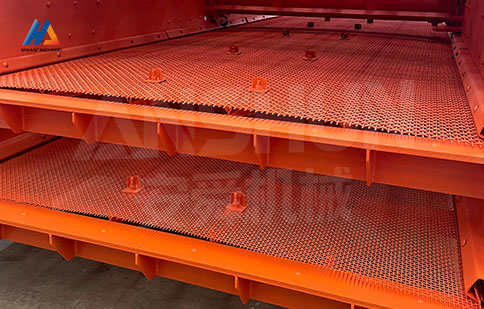
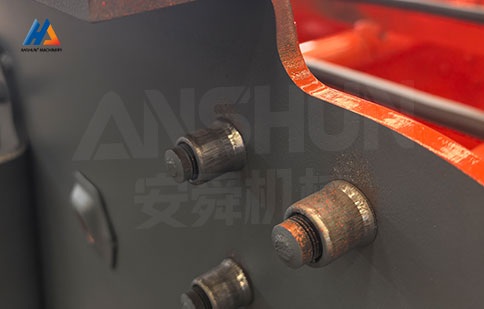
Torque-Shear (TC) Bolts Throughout - Uniform Clamping Force
All exciter-to-screen-box and structural bolted connections use torque-shear (TC) high-strength bolts rather than conventional hex bolts. TC bolts are tightened until the shear pin at the bolt tip shears off at a precisely defined torque, guaranteeing that every bolt in every joint reaches the same clamping force regardless of operator technique or tool calibration. Uniform clamping force prevents the differential bolt loosening that causes fretting, fatigue cracking, and accelerated joint wear under continuous high-frequency vibration.
-
Large Double Amplitude 7–12 mm - 20–40% Higher Throughput
The larger YK models (2YK-2870 and above) operate at 7–12 mm double amplitude versus the 5–8 mm standard on conventional circular vibrating screens. The higher amplitude generates a greater throw index on the material layer, causing particles to leave the screen surface more completely on each vibration cycle. Fine particles reach the screen apertures faster, pass-through rate increases, and blinding is actively prevented by the aggressive material motion. At equal screen area, the large-amplitude YK delivers 20–40% higher throughput than a standard-amplitude machine on the same feed - or equivalently, a smaller screen area can handle the same feed rate, reducing capital and installation cost.
-
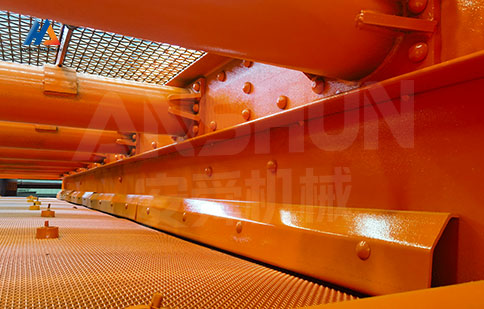
Application-Matched Screen Media - PU, Welded, or Manganese Wire
Three screen media types are available across the YK range: imported polyurethane (PU) panels for high-wear and high-moisture applications where wire blinding is a problem; welded wire panels for accurate aperture retention in dry aggregate sizing; and manganese steel wire cloth for high-impact, coarse-material applications where wire diameter and weight are not constraints. The correct media type is specified at order stage based on feed material, moisture, aperture size, and required throughput - not as a generic fit-all solution.
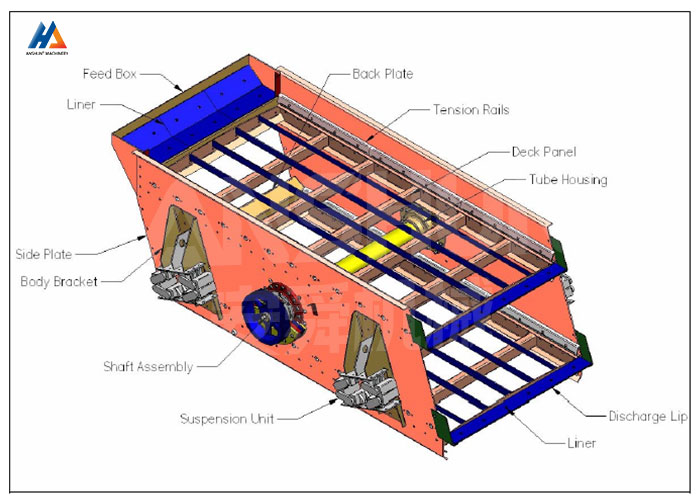
What Is the Working Principle of the Circular Vibrating Screen?
The screen box is supported on coil spring isolators mounted on the inclined side-plate frame. The exciter shaft - carrying eccentric block weights - is driven by the electric motor through a V-belt drive and rotates at 730–900 rpm depending on model. The rotating eccentric mass generates a centrifugal force that causes the entire screen box to orbit in a circle in the plane perpendicular to the shaft axis. Viewed from the side, the motion of any point on the screen deck traces a circle of diameter equal to the double amplitude (5–12 mm depending on model and eccentric setting).
Feed material enters at the elevated feed end of the inclined deck. The circular orbital motion simultaneously stratifies the material layer - fine particles migrate downward to the screen surface while coarse particles float upward - and conveys the material toward the lower discharge end. Fine particles that reach the screen apertures pass through to the deck below (or to the undersize hopper in the case of the bottom deck); particles larger than the aperture are conveyed to the oversize discharge chute at the lower end of each deck. In wet screening applications, spray water is introduced above the top deck to disperse clay agglomerates and assist fine-particle passage through the apertures. The spring isolators between the screen box and the support structure absorb the residual circular reaction force, protecting the supporting steelwork from dynamic fatigue.
Get QuoteFAQ
What is the difference between 2YK and 3YK models – when should I choose three decks?
The 2YK prefix denotes a two-deck (two-layer) screen producing three fractions (oversize, mid-size, and undersize); 3YK denotes a three-deck screen producing four fractions. Choose three decks when the process requires simultaneous separation at three cut points – for example, producing 0–5 mm, 5–20 mm, 20–40 mm, and +40 mm fractions from a single machine. Two decks are sufficient when only two cut points are needed, and the lighter two-deck box reduces the structural and foundation loads for a given screen width.
Why is Q345R steel specified instead of the Q235 used by many competitors?
Q235 is a general structural steel with a yield strength of 235 MPa and relatively low notch toughness. Under the high-cycle fatigue loading of a vibrating screen (typically 800–900 vibrations per minute, 24 hours per day), Q235 side plates are prone to progressive crack propagation from weld toes and bolt holes – the dominant failure mode causing side-plate splitting in the field. Q345R has a 47% higher yield strength and, more importantly, significantly higher Charpy impact toughness, which resists crack initiation and slows propagation even at stress concentrations. The material premium is small relative to the extended plate life and reduced unplanned-downtime cost.
Which screen media type is best for my application?
For dry aggregate classification (limestone, granite, basalt) at apertures above 10 mm in normal operating conditions, welded wire panels offer accurate aperture and good open area. For wet screening, fine apertures (below 10 mm), or feeds with high clay content where blinding is a persistent problem, polyurethane panels are the standard recommendation – their flexibility prevents particle lodging and self-clears under vibration. For coarse primary screening at apertures above 40 mm with high-impact feed (e.g., ROM ore, demolition concrete), manganese steel wire offers the required impact resistance at low cost. We will specify the correct type at quotation stage based on your feed data.
Is On-site Commissioning Support Available?
Remote commissioning support via video call is included at no charge. On-site engineer dispatch is available as an optional paid service — lead time and cost depend on location. Please discuss before purchase.