English

Fine Sand Recovery Machine
Model: LZ Series · Sand Washing · Sand & Aggreagte
-
Feed Size
≤5mm
-
Capacity
30-650 m³/h
-
Power
8.6-79.5 kw
- ISO9001
- CE
- EAC
We reply within 24 hours
Product Overview
What Is a Fine Sand Recovery Machine
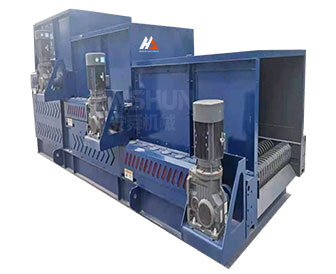
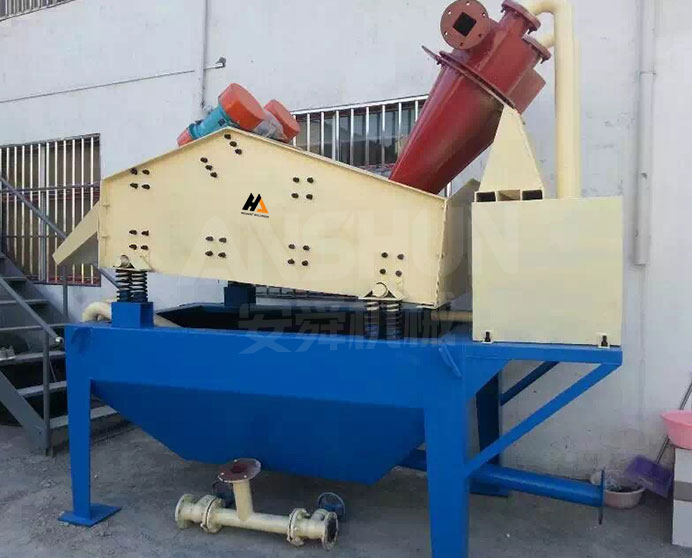
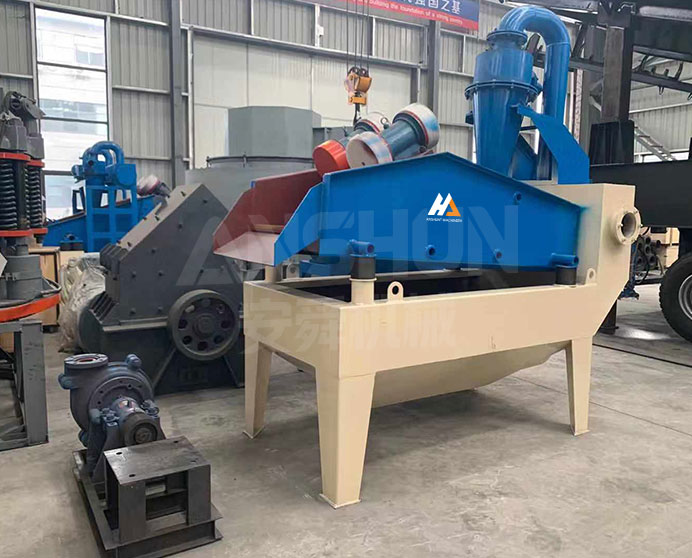
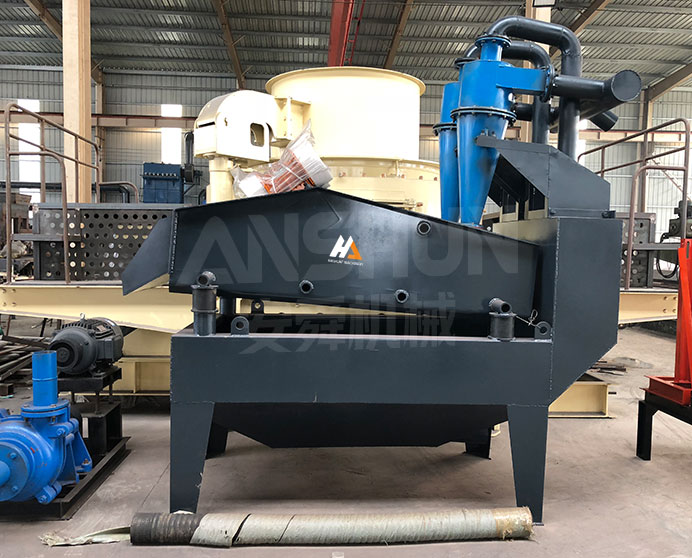
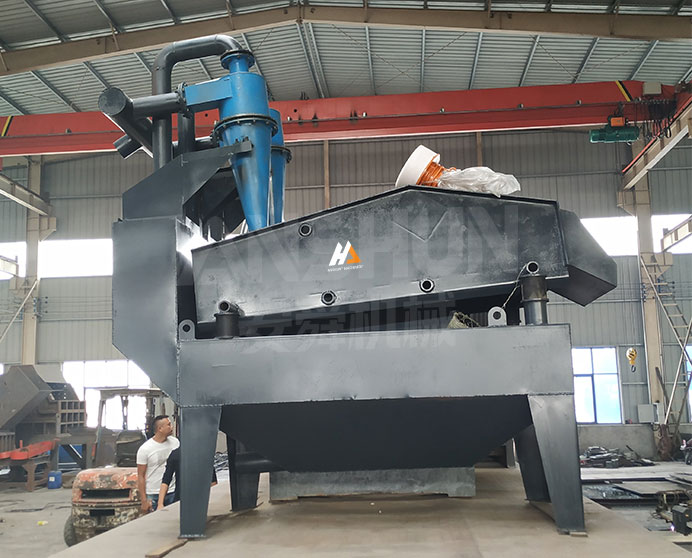
The LZ fine sand recovery machine is a two-stage unit that captures and dewaters fine sand (typically 0.075–0.6 mm) from the overflow stream of sand washers, crushing plants, and dredging operations. Without recovery, this fine fraction is lost to the settling pond – representing both a product loss and an accelerating maintenance liability as pond capacity is consumed. The LZ processes the overflow slurry through a hydrocyclone, which separates fine sand by centrifugal force and discharges it as a concentrated underflow onto a vibrating dewatering screen, producing a stackable fine-sand product at 12–18% surface moisture.
Eight standard models cover hydrocyclone diameters from 250 mm (LZ250, 30–80 m³/h) to 1200 mm (LZ1200, 500–650 m³/h). The Cr26 high-chrome slurry pump and imported polyurethane screen panels are specified as standard across the range to minimize wear-part replacement frequency in abrasive fine-sand slurry duty.
Applicable Materials
River sand slurry, Sea sand slurry, Granite M-sand (manufactured sand) slurry, Limestone crusher-fines slurry, Alluvial gravel wash overflow, Coal-preparation fine tailings, Dredge hydraulic-transport slurry, Quartzite and feldspar fine-sand slurry
Industries
Aggregate & Concrete Sand Production, Quarry Manufactured-Sand Plant, River & Sea-Bed Dredging, Ready-Mix Concrete & Dry-Mortar Supply, Coal Preparation, C&D Waste Recycling, Glass Raw-Material Processing
Technical Specifications
|
Model |
Slurry Pump |
Separator Specification(mm) |
Material of Screen |
Power(kw) |
Capacity(m3/h) |
Weight(kg) |
|
|
Power(kw) |
Material |
||||||
|
LZ250 |
7.5-11 |
Cr26 |
250 |
Imported Polyurethane |
2×0.55 |
30-80 |
2050 |
|
LZ300 |
11-15 |
Cr26 |
300 |
Imported Polyurethane |
2×0.75 |
40-100 |
2200 |
|
LZ350 |
15 |
Cr26 |
350 |
Imported Polyurethane |
2×0.75 |
70-130 |
2555 |
|
LZ550 |
15-22 |
Cr26 |
550 |
Imported Polyurethane |
2×1.1 |
100-220 |
3250 |
|
LZ650 |
18.5-30 |
Cr26 |
650 |
Imported Polyurethane |
2×1.1 |
120-272 |
3945 |
|
LZ750 |
37-55 |
Cr26 |
750 |
Imported Polyurethane |
2×1.5 |
180-350 |
4900 |
|
LZ900 |
55-65 |
Cr26 |
900 |
Imported Polyurethane |
2×2.2 |
250-500 |
5650 |
|
LZ1200 |
60-74 |
Cr26 |
1200 |
Imported Polyurethane |
2×2.5 |
500-650 |
6750 |
Key Features & Advantages
-
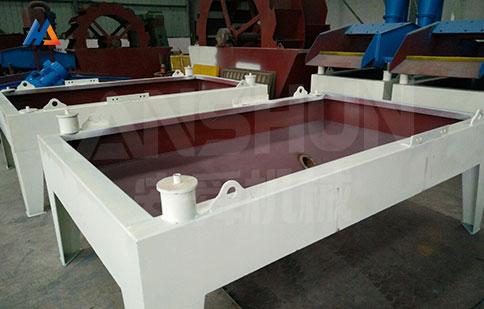
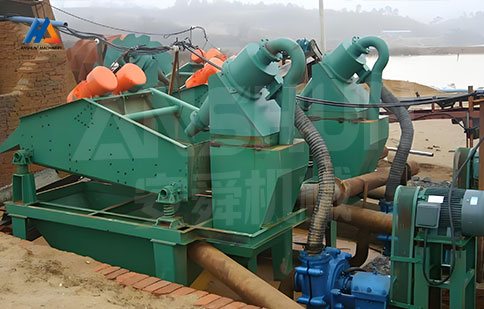
Cr26 High-Chrome Slurry Pump
The centrifugal slurry pump is wet-end-lined with Cr26 white iron - 26% chromium content delivers a Brinell hardness of 600–700 HB, providing three to five times the service life of standard cast-iron pump casings in sand-and-gravel slurry duty. The pump maintains stable head and flow across the full fine-sand particle-size range without clogging.
-
Imported Polyurethane Dewatering Screen
Both dewatering screen decks are fitted with imported polyurethane panels rated at 65 Shore A hardness. Polyurethane combines abrasion resistance approximately ten times that of woven wire with an inherent flexibility that self-clears blinding particles under vibration. Screen life on river-sand duty typically exceeds 4,000 operating hours before panel replacement is required.
-
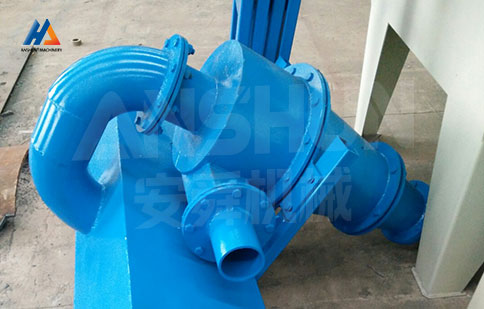
Hydrocyclone Fine-Sand Separation
The cylindrical-conical hydrocyclone separates fine sand from the feed slurry by centrifugal force without moving parts. Feed pressure generated by the slurry pump accelerates slurry tangentially into the cyclone body; fine sand concentrates in the underflow and discharges onto the dewatering screen while clarified water exits through the vortex finder overflow. Cut size is controlled by cyclone diameter - the eight LZ models cover 250 mm to 1200 mm cyclone diameters.
-
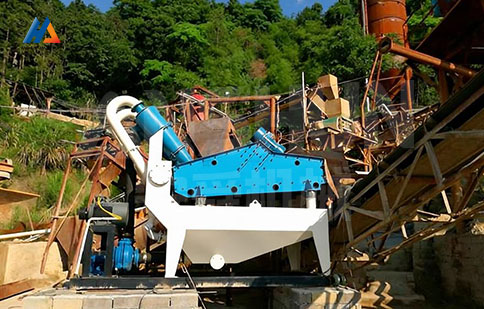
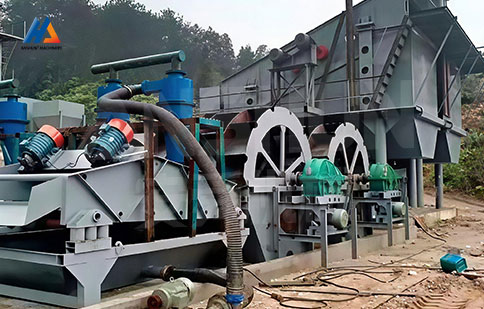
Dual-Motor Vibrating Dewatering Screen
Two counter-rotating vibration motors generate a linear-motion excitation force across the screen deck, combining dewatering and transport in a single pass. The dual-motor arrangement produces uniform amplitude across the full deck width, ensuring consistent drainage and a uniformly moistened product at discharge. Standard screen drive power ranges from 2×0.55 kW (LZ250) to 2×2.5 kW (LZ1200).
-
Eight Standard Models, 30–650 m³/h
The LZ series covers eight hydrocyclone diameters from 250 mm to 1200 mm, serving slurry processing capacities from 30 m³/h in small plant or dewatering applications up to 650 m³/h in high-volume aggregate washing and dredging operations. All models share the same mounting interface and electrical specification, simplifying replacement or capacity upgrade.
What Is the Working Principle of the Fine Sand Recovery Machine?
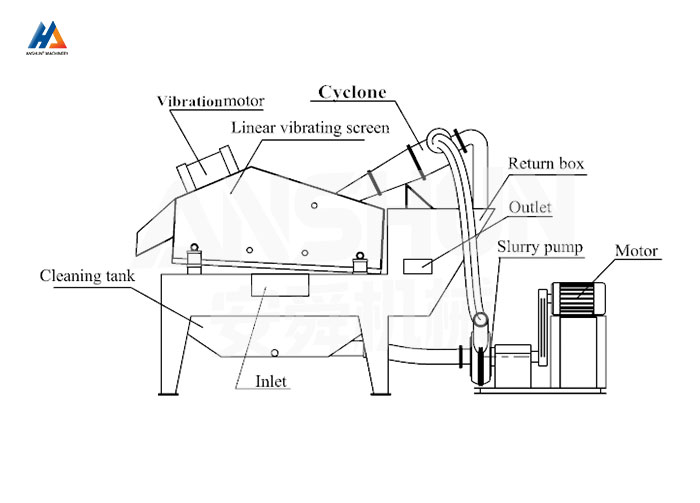
Overflow slurry from the upstream sand washer or wash plant sump is drawn into the Cr26 slurry pump, which pressurizes the feed to the hydrocyclone inlet at 0.05–0.15 MPa depending on model and required cut size. Inside the hydrocyclone, the pressurized slurry enters tangentially at the cylindrical feed inlet, generating a high-velocity spiral flow. Centrifugal acceleration - typically 50 to 200 times gravitational acceleration depending on cyclone diameter - stratifies the slurry: coarser, denser fine-sand particles migrate outward to the cyclone wall and spiral downward to the underflow apex, while fine clay particles and clarified water migrate inward and exit upward through the vortex-finder overflow.
The underflow - a concentrated sand-slurry stream - discharges downward onto the feed end of the polyurethane dewatering screen. The dual counter-rotating vibration motors produce a linear-motion conveying force that moves the sand toward the discharge lip while water drains through the screen apertures into the collection pan below. The dewatered fine sand exits at 12–18% surface moisture and falls onto the product conveyor. Clarified overflow from the cyclone vortex finder and drainage water from the screen collection pan are directed back to the settling pond or recirculated to the wash-water system depending on site layout.
Get QuoteFAQ
What particle size does the LZ series recover, and what is the cut point?
The hydrocyclone cut point (d50 – the particle size recovered at 50% efficiency) depends on cyclone diameter, feed pressure, and slurry density. As a guide, the LZ250 operates at a d50 of approximately 45–75 µm, recovering most material above 0.1 mm; the LZ1200 operates at a d50 of approximately 100–150 µm, suited to coarser fine-sand recovery or high-volume dewatering where a higher cut point is acceptable. For applications requiring recovery of very fine material (sub-75 µm), a multi-cyclone arrangement or a smaller-diameter LZ model at lower throughput is recommended.
How long does the Cr26 pump last, and what are the replacement intervals?
On river sand and alluvial gravel slurry (d50 approximately 0.2–0.5 mm, slurry density 1.2–1.4 t/m³), Cr26 wet-end components typically run 3,000–5,000 hours before the impeller and volute liner require replacement. On harder, more abrasive feeds (granite fines, quartzite sand), this reduces to 1,500–2,500 hours. We recommend keeping one spare impeller and liner set per unit in site inventory and scheduling wear-measurement inspections at 500-hour intervals.
Can the LZ unit be added to an existing wash plant without civil modifications?
Yes. The LZ series is designed as a standalone skid-mounted unit. It requires a flat, level pad (concrete or compacted gravel) rated for the unit weight, a power connection to the combined motor load, and a slurry feed line from the wash plant overflow sump. No structural civil works are required in most installations. The slurry pump is close-coupled to the unit and the feed pipe length from the sump to the pump inlet should be kept below 3 m to avoid cavitation at high flow rates.
Is On-site Commissioning Support Available?
Remote commissioning support via video call is included at no charge. On-site engineer dispatch is available as an optional paid service — lead time and cost depend on location. Please discuss before purchase.