English

Mud Rock Stone Separator
Model: GZS Series · Sand Washing · Sand & Aggreagte
-
Feed Size
45mm
-
Capacity
30-1000t/h
-
Power
7.5-110kw
- ISO9001
- CE
- EAC
We reply within 24 hours
Product Overview
What Is a Mud Rock Stone Separator?
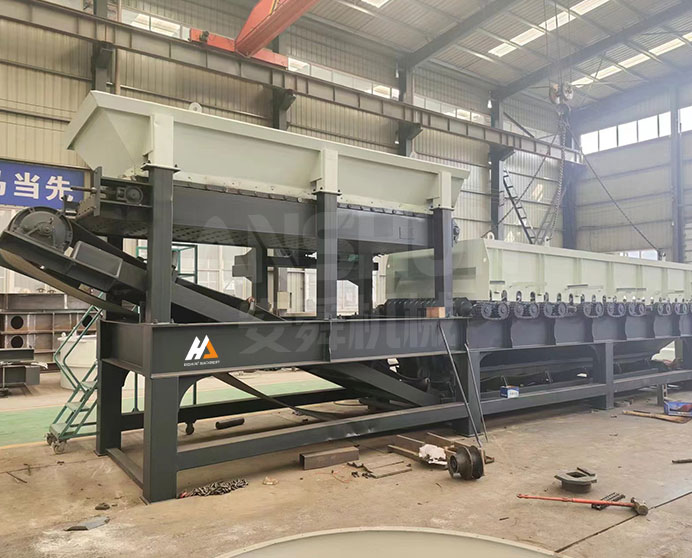
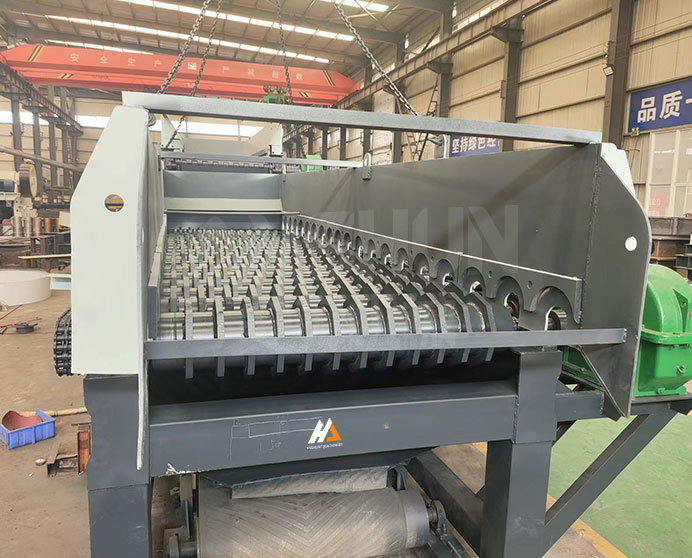
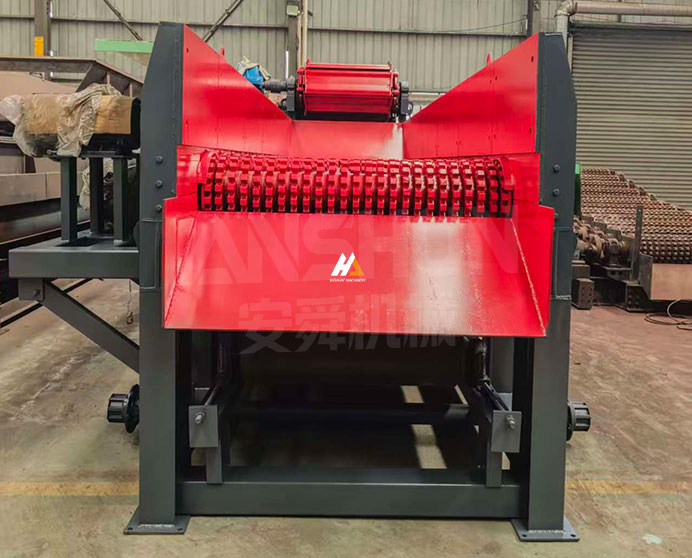
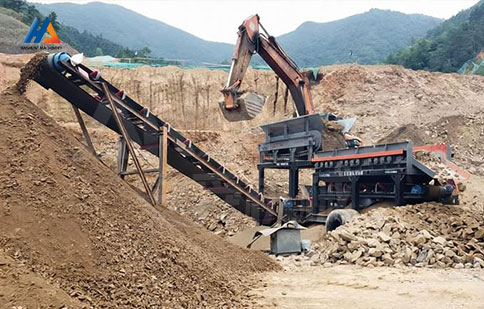
The GZS mud rock stone separator is a multi-shaft roller screen designed to separate coarse stone from mud, clay, sand, and fine debris in run-of-mine, alluvial, and demolition-waste feeds. Unlike conventional flat or trommel screens, the open rotating-disc geometry does not rely on surface contact to classify material – instead, oversize stone is conveyed across the shaft array while undersized material, clay, and slurry pass freely through the adjustable gaps between discs, regardless of feed moisture or clay content.
Nine standard models cover feed capacities from 30 t/h (GZS0816) to 1000 t/h (GZS1860), with axial disc clearances adjustable from 10 mm to 100 mm to match the target separation size. The GZS is used as a primary separation stage ahead of jaw or impact crushers, as a lump-ore / fine-ore split in metal-mine processing, and as a soil-removal step in construction-and-demolition waste recycling lines.
Applicable Materials
Run-of-mine quarry stone, Alluvial gravel and sand, River dredge material, Iron ore, Copper ore, Coal, Limestone, Granite, Basalt, Mixed C&D demolition waste, Topsoil with stone, Overburden with embedded rock
Industries
Hard Rock Quarrying, Metal & Non-Metal Mining, Aggregate & Sand Production, Coal Preparation, Highway, Railway & Hydraulic Engineering, C&D Waste Recycling, Soil Remediation & Land Reclamation
Technical Specifications
|
Model |
Power(kw) |
Axial Clearance(mm) |
Number of Shaft |
Feed Size(cm) |
Capacity(t/h) |
Weight(t) |
|
GZS0816 |
7.5-11 |
10-50 |
6-8 |
≤20 |
30-100 |
4 |
|
GZS1020 |
11-15 |
10-50 |
7-10 |
≤25 |
60-180 |
7 |
|
GZS1230 |
18.5-30 |
15-70 |
8-11 |
≤30 |
100-300 |
12 |
|
GZS1235 |
22-37 |
20-80 |
10-13 |
≤30 |
130-350 |
13 |
|
GZS1340 |
37-45 |
20-90 |
11-14 |
≤33 |
150-500 |
16 |
|
GZS1445 |
45-55 |
25-100 |
12-15 |
≤35 |
180-600 |
20 |
|
GZS1550 |
55-75 |
25-100 |
13-17 |
≤38 |
200-700 |
23 |
|
GZS1655 |
75-90 |
30-100 |
14-18 |
≤40 |
250-800 |
28 |
|
GZS1860 |
75-110 |
30-100 |
15-20 |
≤45 |
350-1000 |
35 |
Key Features & Advantages
-
Multi-Shaft Roller Screen Design
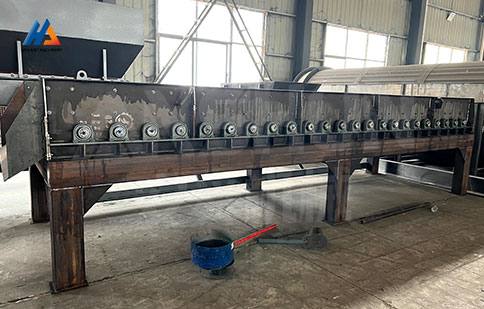
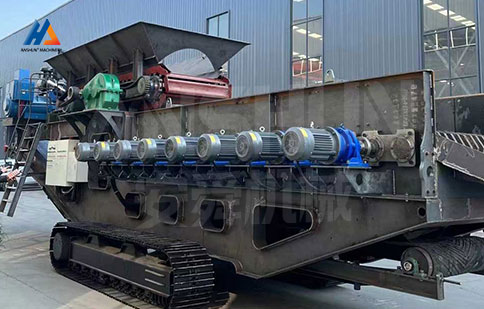
An array of parallel shafts fitted with interleaved disc rollers rotates synchronously to convey, agitate, and separate feed material by size. The adjustable axial clearance between discs (10–100 mm depending on model) is set to match the target separation size, allowing a single machine to be reconfigured for different product splits without changing screens or media.
-
Wide Feed Acceptance - Up to 45 cm Lump Size
The open-roller geometry accepts irregular, cohesive, and oversized feed that would blind or damage a conventional flat or trommel screen. Run-of-mine material containing clay balls, root masses, or stone up to 45 cm passes freely across the shaft array, eliminating the pre-breaking or pre-screening stage required by many competing separation technologies.
-
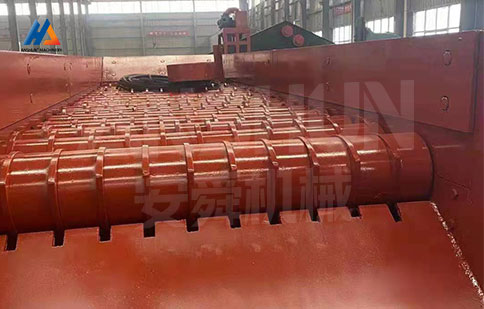
Self-Cleaning Roller Action
Counter-rotating adjacent shafts and the inter-disc geometry create a continuous kneading and stripping action that prevents clay and wet fines from bridging between discs. The machine maintains consistent aperture and throughput in feeds with clay content up to 40%, where woven-wire and punch-plate screens lose effective open area within minutes.
-
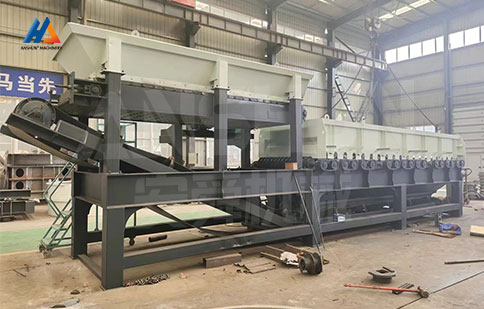
Nine Standard Models, 30–1000 t/h
The GZS series covers nine frame sizes from GZS0816 (30–100 t/h, 7.5 kW) to GZS1860 (350–1000 t/h, 110 kW), serving small quarry washing lines through to large mine primary separation stations. All models share the same shaft cartridge and disc geometry, simplifying spare-parts inventory across a multi-machine site.
-
Low Maintenance Shaft Cartridge
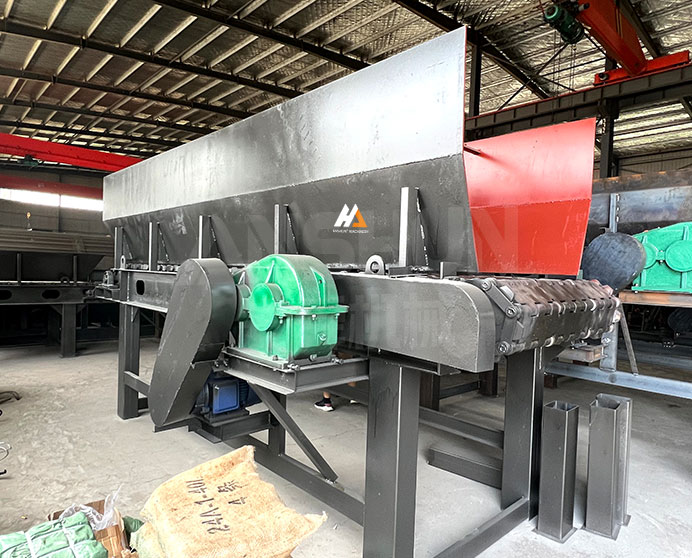
Each shaft is mounted in sealed, self-aligning bearing cartridges that can be removed and replaced individually without disturbing adjacent shafts. Disc wear elements are bolted, not welded, enabling individual disc replacement in the field. Drive is via a heavy-duty chain-and-sprocket system with a single gearmotor, reducing drivetrain component count versus multi-motor designs.
What Is the Working Principle of the Mud Rock Stone Separator?
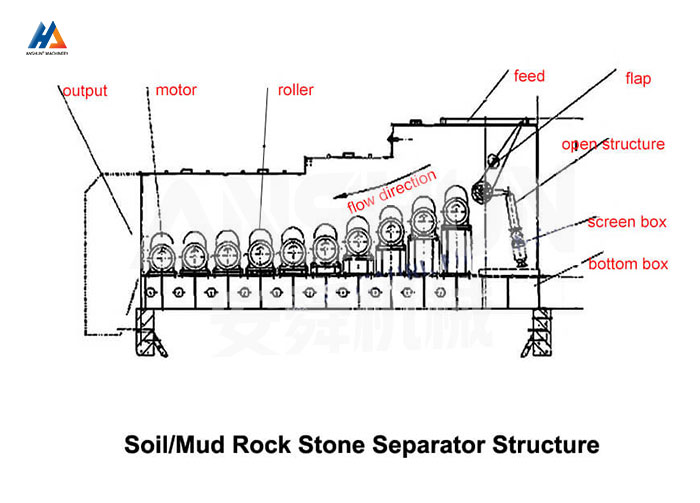
Feed material is deposited onto the inlet end of the shaft array by a belt conveyor or direct chute. The shafts - arranged in a horizontal or slightly inclined plane - are driven by a chain-and-sprocket transmission from a single gearmotor, rotating all shafts in the same direction at a controlled speed. Each shaft carries a series of disc elements separated by spacer rings; the disc-to-disc clearance across adjacent shafts defines the effective separation aperture.
As material moves along the shaft array under the combined action of gravity and the rotating discs, fine particles, clay, sand, and slurry smaller than the axial clearance fall through the gaps between discs and collect in the undersize hopper below. Coarse stone and oversized material that cannot pass through the gaps is conveyed to the discharge end of the array and exits as the oversize product. The counter-rotation shearing action between adjacent shaft discs continuously breaks apart clay agglomerates and strips cohesive fines from stone surfaces, preventing aperture blinding. Material that does not fit neatly into either category - flat or elongated particles, clay-coated stone - is kneaded and agitated until it either passes through or is fully conveyed to the oversize discharge.
Get QuoteFAQ
How is the separation size adjusted on a GZS roller separator?
The axial clearance between discs on each shaft is set by spacer rings during assembly. To change the separation size, the shaft cartridges are withdrawn, the spacer rings replaced with the target-gauge set, and the cartridges reinstalled. For large separation-size changes (e.g., switching from 20 mm to 60 mm), this takes two to four hours per shaft. For in-range fine adjustment, the shaft-end adjusters allow ±5 mm variation without shaft removal.
How does the GZS perform on high-clay, wet feeds?
The counter-rotating disc geometry creates a shearing and kneading action between adjacent shafts that actively breaks up clay balls and strips clay coating from stone surfaces. In controlled trials on feeds with 30–40% clay-by-mass at 15–20% moisture, the GZS maintained stable throughput and consistent aperture over 8-hour shifts where equivalent flat-screen and trommel installations blinded within 20–40 minutes. For clay content above 40% or feeds with free moisture above 25%, we recommend combining the GZS with a downstream wheel washer or scrubber.
What is the expected disc wear life on abrasive feeds such as granite or iron ore?
On granite (200–260 MPa) at standard operating clearance, high-chrome cast disc sets typically run 1,500–2,500 operating hours before the clearance has opened beyond specification and requires re-spacing or disc replacement. On softer materials (limestone, alluvial gravel), disc life exceeds 4,000 hours in most installations. We recommend keeping one spare disc set per shaft in site inventory and scheduling clearance checks at 500-hour intervals.
Is On-site Commissioning Support Available?
Remote commissioning support via video call is included at no charge. On-site engineer dispatch is available as an optional paid service — lead time and cost depend on location. Please discuss before purchase.