English

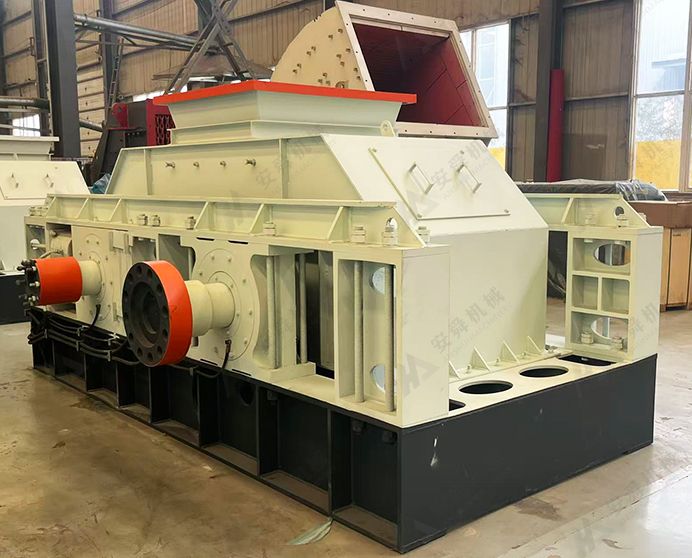
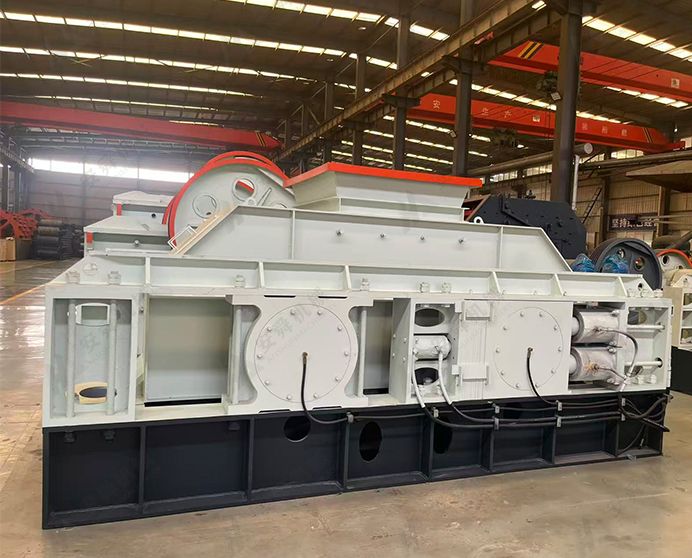
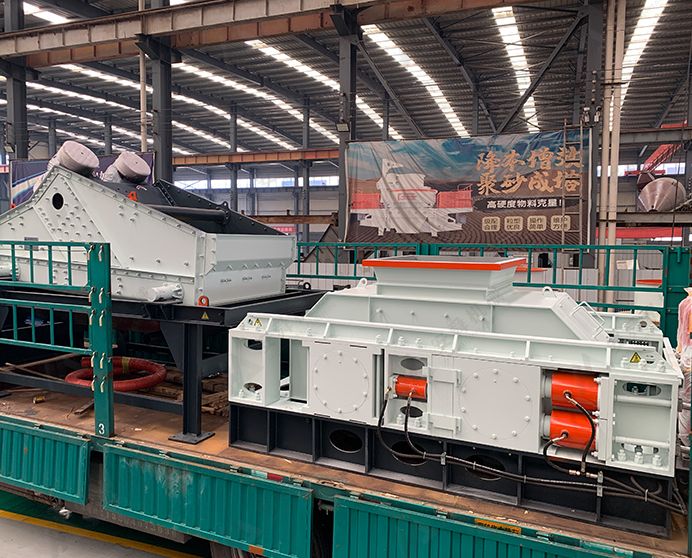
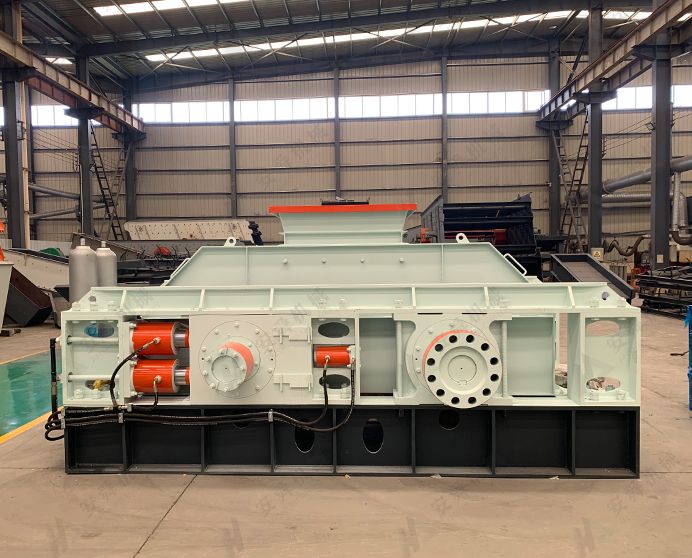
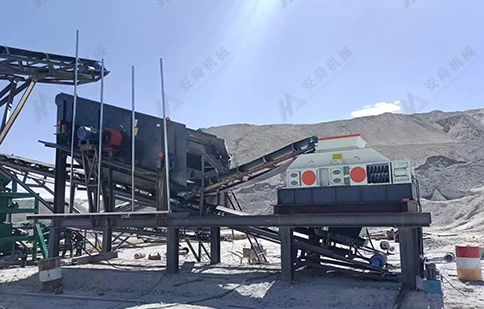
Double Roller Crusher
Model: PGY Series · Sand Making · Limestone & Gravel
-
Capacity
20-400t/h
-
Feed Size
≤120mm
-
Power
44-630kw
- ISO9001
- CE
- EAC
We reply within 24 hours
Product Overview
What is a Double Roller Crusher ?
The Double Roller Crusher (2PGY series) breaks material by compression between two counter-rotating rolls that pull feed downward through a fixed gap. Unlike impact crushers that fracture through high-velocity collision, the roller crusher applies slow, steady compressive force – generating less fines, lower dust, and a more consistent, narrow product size distribution. It is the preferred choice when product shape, minimum oversize, and low fines content matter more than maximum throughput per unit of power.
Ten standard models scale from the 2PGY750×500 (20–30 t/h, feed ≤40 mm) to the 2PGY2000×1200 (300–400 t/h, feed ≤120 mm), covering secondary and fine crushing duties across a wide range of soft-to-medium materials. The spring-loaded floating roll provides automatic overload protection – if an uncrushable object enters the gap, the spring allows the roll to retract and pass it, then returns to the set gap without operator intervention.
Applicable Materials
Coal, Limestone, Gypsum, Salt, Coke, Slag, Soft ore, Fertiliser, Clay minerals, Materials with compressive strength ≤160 MPa.
Industries
Coal Processing & Preparation, Cement & Building Materials, Chemical Industry, Fertiliser Production, Mining Secondary & Fine Crushing, Aggregate Production.
Best suited for materials with compressive strength ≤160 MPa. Not recommended for highly abrasive hard rock (granite, quartzite) where roll surface wear becomes prohibitive — contact us to confirm suitability.
Technical Specifications
|
Model |
Roll Diameter(mm) |
Roll Width(mm) |
Feeding Size(mm) |
Capacity(t/h) |
Power(kw) |
|
2PGY750X500 |
φ750 |
500 |
≤40 |
20-30 |
2×(22-30) |
|
2PGY800X600 |
φ800 |
600 |
≤40 |
30-40 |
2×(30-37) |
|
2PGY800X800 |
φ800 |
800 |
≤40 |
40-50 |
2×(37-45) |
|
2PGY1000x800 |
φ1000 |
800 |
≤40 |
50-80 |
2×(45-55) |
|
2PGY1000x1000 |
φ1000 |
1000 |
≤40 |
80-100 |
2×(55-90) |
|
2PGY1200x1000 |
φ1200 |
1000 |
≤60 |
100-120 |
2×(75-132) |
|
2PGY1200x1200 |
φ1200 |
1200 |
≤60 |
120-150 |
2×(90-132) |
|
2PGY1500x1000 |
φ1500 |
1000 |
≤80 |
150-200 |
2×(132-160) |
|
2PGY1800x1000 |
φ1800 |
1000 |
≤100 |
250-300 |
2×(250-315) |
|
2PGY2000x1200 |
φ2000 |
1200 |
≤120 |
300-400 |
2×(315-355) |
Key Features & Advantages
-
Compression Crushing - Low Fines, Consistent Product Gradation
Slow-speed roll crushing applies compressive force rather than impact energy. Material fractures at a controlled size determined by the roll gap, producing minimal oversize and significantly less fines than hammer or impact crushers on the same feed. The result is a tighter, more predictable product size band - reducing screen load and downstream process variability.
-
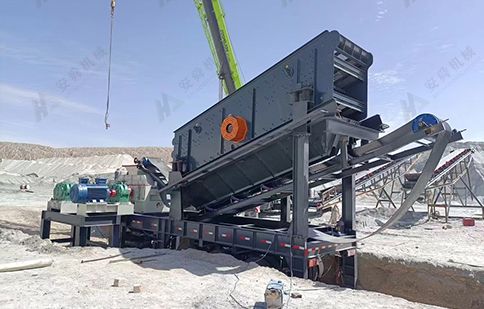
Spring-Loaded Floating Roll - Automatic Overload Protection
One roll is fixed; the other is mounted on spring-loaded bearing housings. If an uncrushable object enters the gap, the spring allows the floating roll to retract just enough to pass the object, then pulls it back to the set gap automatically. No manual reset, no hydraulic system - a simple, reliable mechanical fuse that protects the rolls and drive from sudden overload.
-
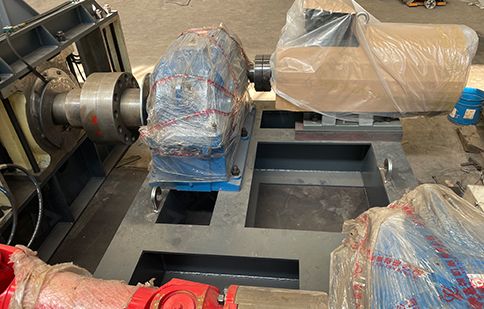
Adjustable Roll Gap - Precise Product Size Control
The gap between the two rolls is set by adjusting the floating roll position against its spring pre-load. Changing the gap directly changes the maximum product size with high repeatability. The adjustment range covers a wide product band on each model, allowing one machine to serve different product specifications by gap setting alone - no cavity change, no downtime for liner swap.
-
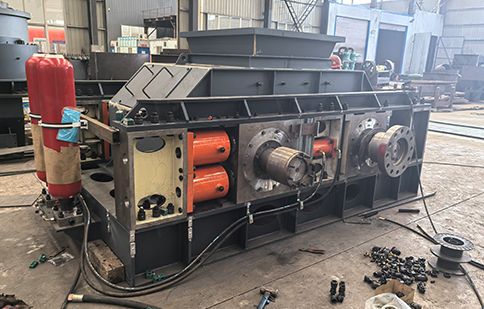
Dual Independent Drive - Balanced Roll Loading
Each roll is driven by its own motor and gearbox. Independent drive balances torque across both rolls and prevents the differential slip that occurs on single-drive twin-roll designs - improving surface wear uniformity and extending roll surface life. If one drive trips, the machine can be stopped in a controlled sequence rather than experiencing a sudden torque imbalance.
-
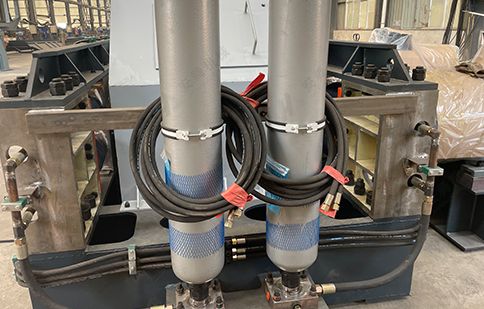
Wide Model Range - φ750 mm to φ2000 mm
Ten standard models cover capacities from 20 t/h to 400 t/h with feed acceptance from ≤40 mm up to ≤120 mm. Roll diameter and width are sized to the required throughput and feed size, ensuring the roll surface operates within its design contact stress range for maximum wear life.
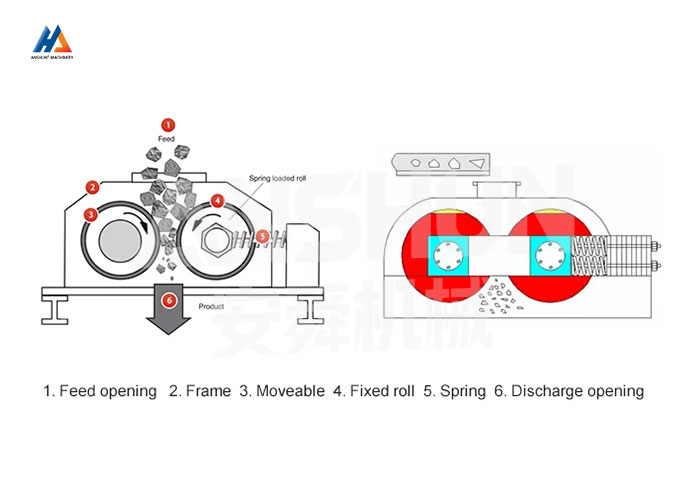
What Is the Working Principle Of the Double Roller Crusher
Feed material is loaded onto the feed plate above the two counter-rotating rolls and falls by gravity into the nip point - the converging zone between the roll surfaces. As the rolls rotate inward and downward, they grip the feed material and pull it through the gap. The compressive force applied at the nip point fractures the material; crushed product exits from the bottom of the rolls and falls onto the discharge conveyor.
The maximum product size is determined by the roll gap - material cannot exit larger than the gap width. Finer particles pass through with less crushing action; oversized particles are held at the nip and fractured until they pass the gap. Because the crushing action is purely compressive with no impact or shear, the product gradation is narrow and repeatable - a direct function of gap setting rather than of rotor speed or feed rate variability.
Get Quote
FAQ
How Does a Double Roller Crusher Compare to a Hammer or Impact Crusher for fine Crushing?
Hammer and impact crushers produce a wider size distribution with a higher fines fraction due to the high-velocity impact mechanism. Double roller crushers produce a narrower gradation with significantly less fines – typically 30–50% less fines content on the same feed material at the same target top size. For applications where fines are a waste or a quality problem (coal preparation, gypsum board, chemical minerals), the roller crusher’s lower fines output directly improves yield and product quality. For applications where high fines are acceptable or desirable (manufactured sand, cement raw material), an impact crusher typically offers lower cost per ton.
What is the Correct Method for Adjusting the Roll Gap?
The roll gap is adjusted by repositioning the floating roll bearing housings relative to the frame, against the spring pre-load. On most 2PGY models, a hand-wheel or adjusting bolt moves the floating roll; a gap gauge confirms the set distance. Always stop the machine and isolate the drive before measuring or adjusting the gap – the nip zone is a severe pinch-point hazard. After adjustment, check the gap at both ends of the roll to ensure parallelism before restarting.
How Long do the Roll Surfaces Last and How are They Repaired?
Roll surface life depends on material abrasiveness. On coal, roll surfaces typically last 1,500–3,000 hours before requiring resurfacing. On limestone, 800–1,500 hours is typical. Roll surfaces can be restored by hardfacing weld – depositing wear-resistant alloy onto the worn surface and re-profiling to the original diameter. Hardfacing is significantly more cost-effective than full roll replacement and can be performed on site with the rolls removed from the machine.
Can the Double Roller Crusher Handle Wet or Sticky feed?
Moderate moisture content (up to 8–12%) is handled without significant performance loss on most materials. Wet, sticky clay-bound feed can accumulate on the roll surfaces and in the nip zone, reducing effective compression and causing roll slip. For high-moisture or sticky feed, scraper blades on the roll surfaces help prevent build-up. Discuss feed moisture and clay content with us before machine selection if your feed conditions are likely to be variable or consistently high-moisture.
Is On-site Commissioning Support Available?
Remote commissioning support via video call is included at no charge. On-site engineer dispatch is available as an optional paid service — lead time and cost depend on location. Please discuss before purchase.