English

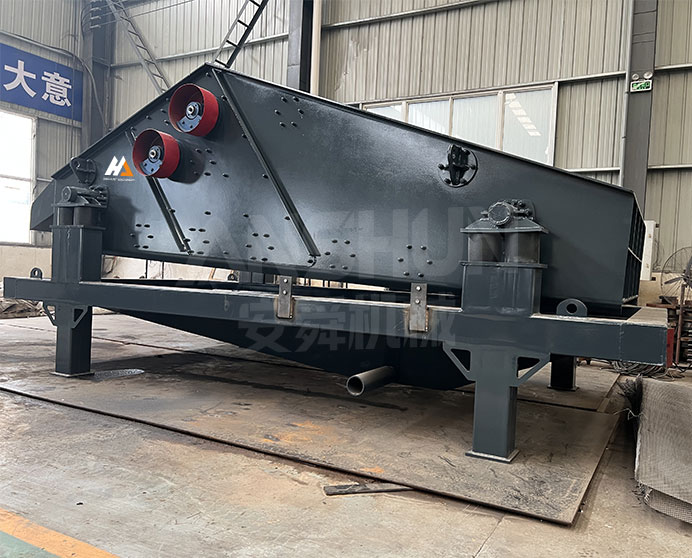
Dewatering Screen
Model: TS Series · Sand Washing · Sand & Aggreagte
-
Feed Size
0.25-50mm
-
Capacity
40–350 t/h
-
Power
4.4–44 kw
- ISO9001
- CE
- EAC
We reply within 24 hours
Product Overview
What Is a Dewatering Screen?
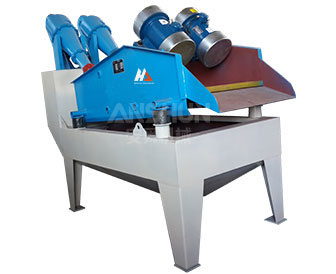
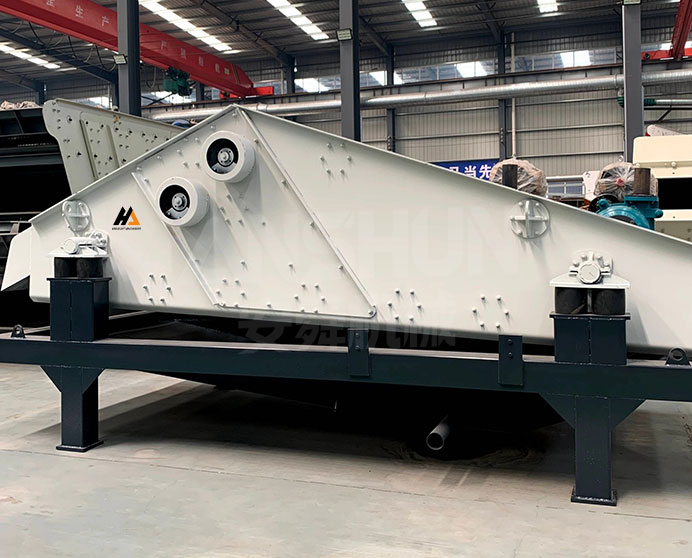
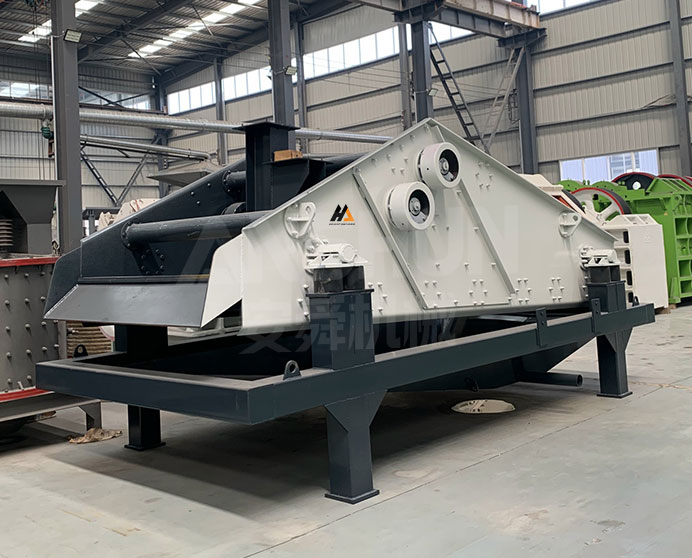
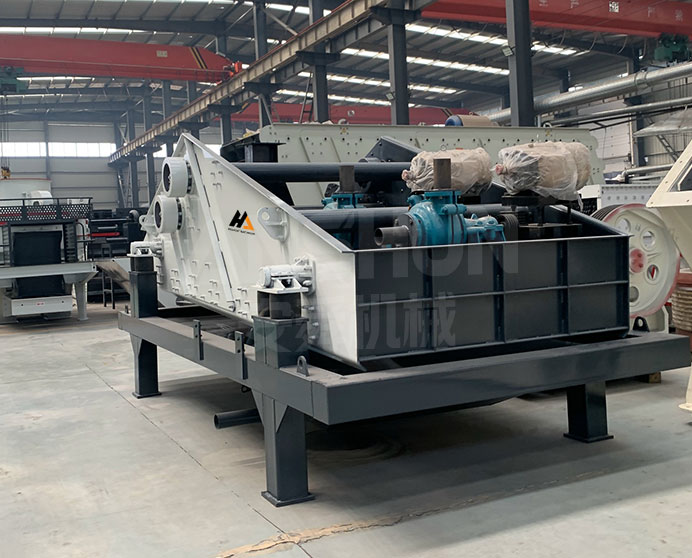
The TS dewatering screen is a steep-angle, high-frequency vibrating screen designed to remove free and capillary-bound moisture from washed sand, aggregate, and recovered fine sand before stockpiling or onward conveying. Material discharged from a sand washer or fine-sand recovery unit typically carries 20–30% surface moisture – too wet to stockpile without drainage runoff or to convey without spillage. The TS screen reduces this to 12–18% in a single pass, producing a stackable, conveyable product.
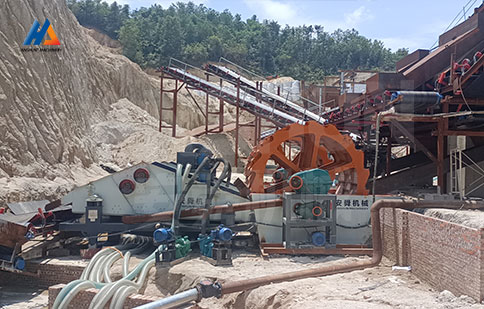
Seven standard models cover cover-surface areas from 3.6 m² (TS-1230, 40–60 t/h) to 18 m² (TS-3060, 280–350 t/h), all operating at 960 rpm vibration frequency with screen mesh apertures selectable from 0.25 mm to 50 mm on the same deck frame. The TS series is the standard final-stage dewatering unit downstream of wheel washers, screw washers, and hydrocyclone-based fine-sand recovery machines across the aggregate, sand, and mineral-processing industries.
Applicable Materials
River sand, Sea sand, Granite manufactured sand, Limestone crusher fines, Recovered fine sand (hydrocyclone underflow), Coal slurry / tailings, Iron ore fines, Recycled concrete aggregate
Industries
Aggregate & Concrete Sand Production, Quarry Manufactured-Sand Plant, River & Sea-Bed Dredging, Coal Preparation, Mineral Processing & Tailings Dewatering, C&D Waste Recycling, Glass Raw-Material Processing
Technical Specifications
|
Model |
Cover Surface(m²) |
Mesh Size(mm) |
Capacity(t/h) |
Vibration Time(min) |
Motor(kw) |
Dimensions(mm) |
|
TS-1230 |
3.6 |
0.25-50 |
40-60 |
960 |
2×2.2 |
3140×1640×1680 |
|
TS-1530 |
4.5 |
0.25-50 |
60-80 |
960 |
2×4 |
3083×1907×1484 |
|
TS-1840 |
7.2 |
0.25-50 |
100-120 |
960 |
2×15 |
4500×2470×3050 |
|
TS-2050 |
9 |
0.25-50 |
200-220 |
960 |
2×15 |
5600×2670×3230 |
|
TS-2450 |
11 |
0.25-50 |
220-250 |
960 |
2×18.5 |
5600×3070×3130 |
|
TS-2460 |
14.64 |
0.25-50 |
220-300 |
960 |
2×18.5 |
6600×3070×3130 |
|
TS-3060 |
18 |
0.25-50 |
280-350 |
960 |
2×22 |
6600×3670×3130 |
Key Features & Advantages
-
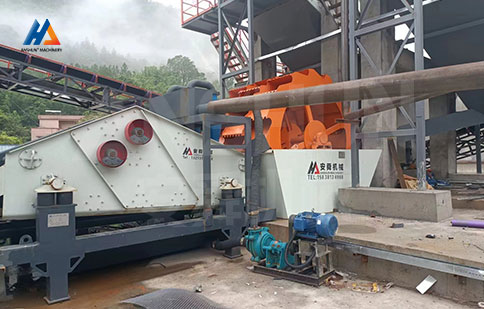
Twin-Shaft Gearbox Exciter - Synchronised Dual-Axis Drive
The TS dewatering screen uses a twin-shaft gearbox-type exciter in which two eccentric shafts are coupled by precision-cut helical gears inside a sealed housing. The gear transmission forces both shafts to rotate in strict counter-phase synchronisation at all times, producing a stable, consistently directional linear excitation force regardless of feed-load variation across the deck. The sealed gearbox protects the exciter internals from the wet, slurry-laden environment that surrounds a dewatering screen.
-
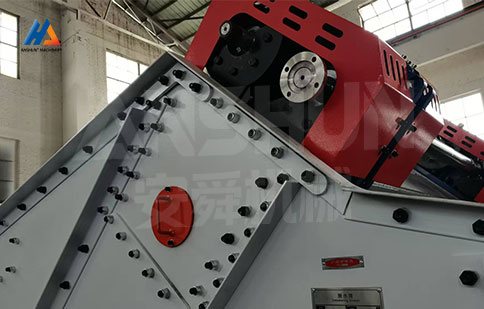
Q245R Boiler-Grade Side Plates & Reinforcement Panels
Both side plates and all reinforcement panels are fabricated from Q245R pressure-vessel (boiler) steel rather than the Q235 mild steel used in standard-grade screens. Q245R has a minimum yield strength of 245 MPa and significantly higher notch toughness and resistance to crack propagation than Q235. Under the continuous high-frequency vibration of dewatering duty (960 rpm, 24 hours per day), this material choice prevents the progressive plate tearing and side-plate cracking that is the dominant structural failure mode on competing machines.
-
Q345 Manganese-Steel Liner Plates & Floor Plat
All internal wear-contact surfaces - the feed box, discharge lip, and floor transition areas - are lined with Q345 manganese steel plate rather than standard carbon steel. Manganese steel work-hardens progressively under repeated impact and abrasion from the wet sand-and-water slurry, developing a hard surface layer while retaining a tough, crack-resistant core. The result is a liner life two to three times that of plain carbon-steel lining, reducing the frequency of liner-replacement shutdowns.
-
Steep 25–30° Operating Angle for Rapid Drainage
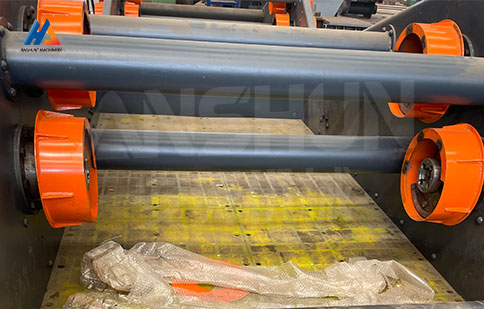
The TS screen deck operates at a steep installation angle that maximises the gravity-drainage component acting on the slurry layer as it travels across the screen. Combined with the 960 rpm vibration frequency, the steep angle accelerates free-water separation in the first third of the deck, giving the remaining deck length more time for capillary-bound moisture removal. This produces a consistently drier discharge product across the full feed-rate range without requiring excessive deck length.
-
Wide Mesh Range 0.25–50 mm - One Frame, Multiple Dutie
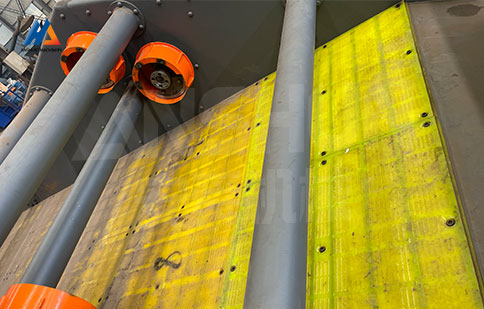
All seven TS models accept screen media across the full 0.25–50 mm aperture range on the same deck frame. Fine apertures (0.25–1 mm) are used for fine-sand and tailings dewatering; coarse apertures (10–50 mm) are used for washed-aggregate dewatering and de-sliming. Changing duty - for example, converting a unit from coarse aggregate dewatering to fine-sand dewatering - requires only a screen-panel change, not a different machine.
What Is the Working Principle of the Dewatering Screen?
Wet feed material - typically discharged directly from a sand washer chute or a hydrocyclone underflow - enters at the elevated feed end of the steeply inclined screen deck. The twin-shaft gearbox exciter, mounted above the screen box and driven by two synchronised motors through the internal helical gear coupling, generates a strong linear vibration force directed along the deck's length. This force is transmitted to the screen box through rigid mounting brackets, causing the entire deck assembly to vibrate at 960 rpm.
As the slurry layer lands on the steep deck, gravity immediately begins draining free water through the screen mesh into the collection pan below, while the high-frequency vibration agitates the particle bed, breaking surface tension and releasing capillary-bound water from between particles. The combined gravity-and-vibration action causes the dewatered solids to migrate down the steep slope toward the discharge lip while drainage water exits continuously through the mesh along the entire deck length. The dewatered product discharges at the lower end of the deck onto the product conveyor at 12–18% surface moisture, while the collected drainage water returns to the wash-water tank or settling system depending on plant layout.
Get QuoteFAQ
What discharge moisture content can I expect from the TS dewatering screen?
Discharge surface moisture depends on feed gradation, feed rate relative to the model’s rated capacity, and screen aperture. For washed sand and aggregate (0.15 mm and coarser) operated within the rated capacity range, typical discharge moisture is 12–18%. For very fine material (sub-0.15 mm), moisture content tends toward the upper end of this range or slightly higher, since fine particles retain more capillary-bound water. Operating at or below the lower end of the rated capacity range generally produces drier output, as material has more residence time on the deck.
Why does the TS screen use a steep operating angle compared to a standard horizontal screen?
A steep angle (25–30°) maximises the gravity component acting to drain free water from the slurry layer as soon as it lands on the deck. This rapid initial drainage is the single largest contributor to overall dewatering performance – most free water separates within the first portion of the deck length. The remaining deck length, combined with the 960 rpm vibration, then focuses on removing the more difficult capillary-held moisture from the particle surfaces. A horizontal screen at the same vibration frequency would require significantly more deck length to achieve the same discharge moisture.
How is the screen mesh selected for a specific application?
Mesh aperture is selected based on the smallest particle size that must be retained on the deck for dewatering – particles smaller than the aperture pass through with the drainage water and are not dewatered by that deck. For washed coarse sand and aggregate (typically retaining everything above 0.15–0.3 mm), apertures of 0.5–1 mm are common. For fine-sand or tailings dewatering where the target product is finer, apertures down to 0.25 mm are used. Coarser apertures (10–50 mm) are used for de-watering and de-sliming larger washed aggregate fractions. We confirm the recommended mesh based on your feed gradation curve at quotation stage.
Is On-site Commissioning Support Available?
Remote commissioning support via video call is included at no charge. On-site engineer dispatch is available as an optional paid service — lead time and cost depend on location. Please discuss before purchase.