English

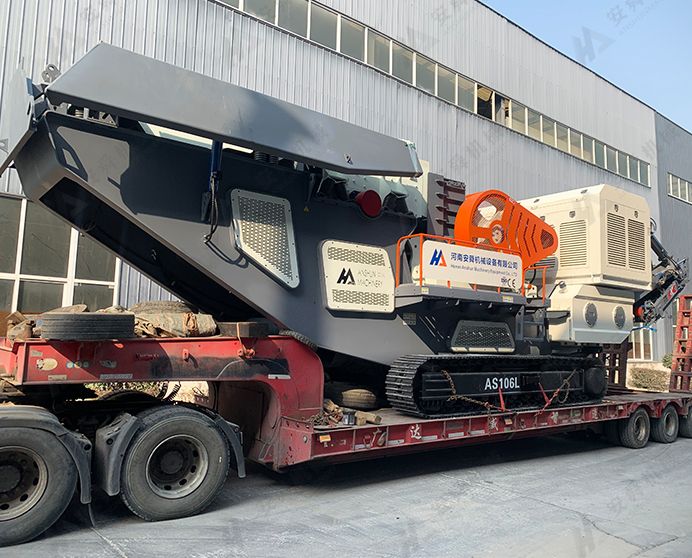
Crawler Jaw Crusher Plant
Model: AT-PE / PEX Series · Primary Crushing · Hard Rock & Ore
-
Capacity
80-300 tph
-
Feed Size
≤800mm
-
Power
240-300KW
- ISO9001
- CE
- EAC
We reply within 24 hours
Product Overview
What Is a Crawler Jaw Crusher Plant?
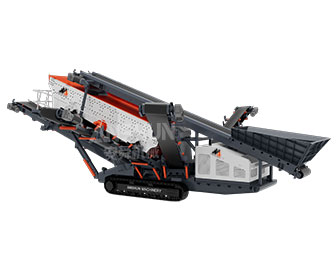
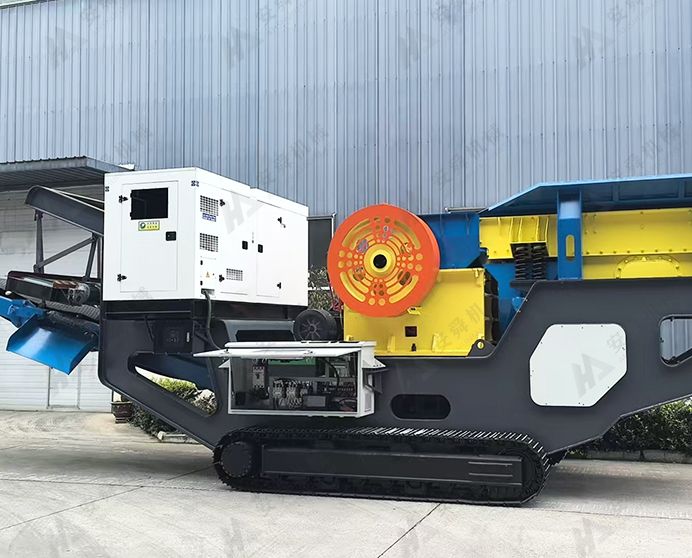
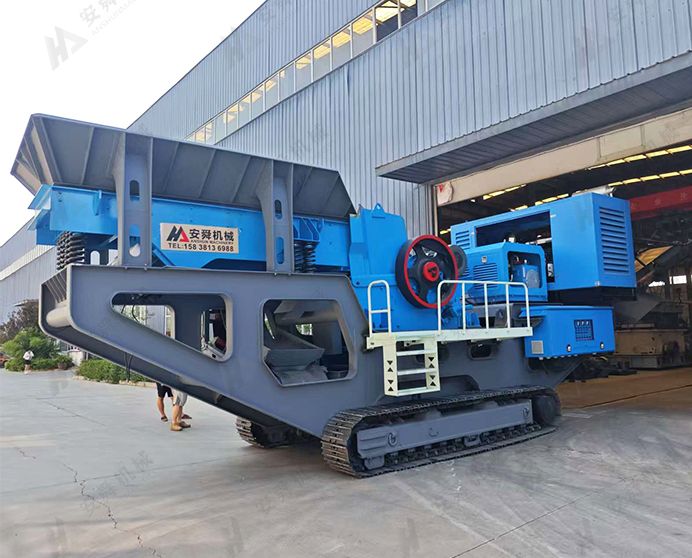
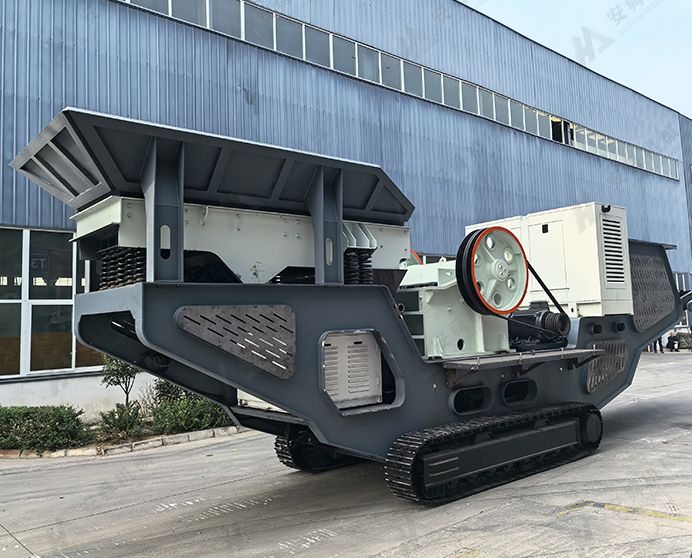
The crawler jaw crusher plant mounts a heavy-duty jaw crusher, vibrating feeder, main conveyor, soil-removal conveyor, magnetic separator, generator set, and hydraulic control system on a single tracked chassis. The result is a fully self-contained primary crushing unit that travels under its own power, sets up without a concrete foundation, and follows the working face as the quarry or demolition site develops.
Four standard models – AT96, AT106, AT116, AT120 – cover jaw openings from SC96 to SC120 and maximum feed sizes from 550 mm to 800 mm, matching output requirements from 100 t/h to over 500 t/h. All models share the same drive architecture, electrical platform, and hydraulic logic, simplifying operator training and spare-parts management across a mixed fleet.
Applicable Materials
Granite, Basalt, Limestone, River Pebble, Quartzite, Iron Ore, Copper Ore, Concrete Rubble, Construction & Demolition Waste, Coal, Slag.
Industries
Hard Rock Quarrying, Metal Mining, Aggregate & Sand Production, Highway & Railway Construction, C&D Waste Recycling, Open-Pit Mining.
Technical Specifications
|
Crawler Jaw Crusher Plant Technical Parameters |
||||
|
Model |
AT96 |
AT106 |
AT116 |
AT120 |
|
Feeder |
||||
|
Equipment |
GZD9638 |
ZSW1042 |
GZD1142 |
GZD1248 |
|
Motor |
5.5KW*2 |
7.5KW*2 |
7.5KW*2 |
7.5KW*2 |
|
Drive Mode |
Motor Drive System |
Motor Drive System |
Motor Drive System |
Motor Drive System |
|
Crusher |
||||
|
Equipment |
SC96 |
SC106 |
SC116 |
SC120 |
|
Maximum Feeding Size |
550mm |
650mm |
700mm |
800mm |
|
Motor |
90KW |
110KW |
132KW |
160KW |
|
Drive Mode |
Motor Drive System |
Motor Drive System |
Motor Drive System |
Motor Drive System |
|
Chassis |
||||
|
Hydraulic Crawler Chassis |
35T |
DL385V |
DL385V |
NS415E |
|
Boat-Type Frame |
Q355 Welding |
Q355 Welding |
Q355 Welding |
Q355 Welding |
|
Main Conveyor |
||||
|
Specification |
B1000*9.4m |
B1000*9.4m |
B1000*12m |
B1200*12.9m |
|
Drive Mode |
Motor Reducer Drive 11KW |
Motor Reducer Drive 11KW |
Motor Reducer Drive 11KW |
Motor Reducer Drive 15KW |
|
Endless Polyester Canvas Belt |
EP300-B1000*5(6.0+1.5) |
EP300-B1000*5(6.0+1.5) |
EP300-B1000*5(6.0+1.5) |
EP300-B1200*5(6.0+1.5) |
|
Soil Removal Conveyor |
||||
|
Specification |
B650*6.8m |
B650*6m |
B650*6m |
B650*6.8m |
|
Drive Mode |
Motor Reducer Drive 4KW |
Motor Reducer Drive 4KW |
Motor Reducer Drive 4KW |
Motor Reducer Drive 4KW |
|
Endless Polyester Canvas Belt |
EP200-B650*3(4.5+1.5) |
EP200-B650*3(4.5+1.5) |
EP200-B650*3(4.5+1.5) |
EP200-B650*3(4.5+1.5) |
|
Magnetic Separator |
||||
|
Specification |
RCYQ-13 |
RCYQ-13 |
RCYQ-13 |
RCYQ-13 |
|
Drive Mode |
Motor Reducer Drive 3KW |
Motor Reducer Drive 3KW |
Motor Reducer Drive 3KW |
Motor Reducer Drive 3KW |
|
Power System |
||||
|
Generator Set |
240KW Generator Set |
300KW Generator Set |
300KW Generator Set |
300KW Generator Set |
|
Electrical System |
||||
|
Electrical Control Cabinet |
Jaw Crusher Motor Soft Start, Other Motors Direct Start, Main Electrical Components Schneider |
Jaw Crusher Motor Soft Start, Other Motors Direct Start, Main Electrical Components Schneider |
Jaw Crusher Motor Soft Start, Other Motors Direct Start, Main Electrical Components Schneider |
Jaw Crusher Motor Soft Start, Other Motors Direct Start, Main Electrical Components Schneider |
|
Hydraulic System |
||||
|
Hopper |
Hydraulic Automatic Folding |
Hydraulic Automatic Folding |
Hydraulic Automatic Folding |
Hydraulic Automatic Folding |
|
Belt Conveyor Folding Cylinder |
Hydraulic Automatic Folding |
Hydraulic Automatic Folding |
Hydraulic Automatic Folding |
Hydraulic Automatic Folding |
|
Hydraulic Pump and Valve Group |
Load-Sensitive Pump and Valve Group |
Load-Sensitive Pump and Valve Group |
Load-Sensitive Pump and Valve Group |
Load-Sensitive Pump and Valve Group |
Key Features & Advantages
-
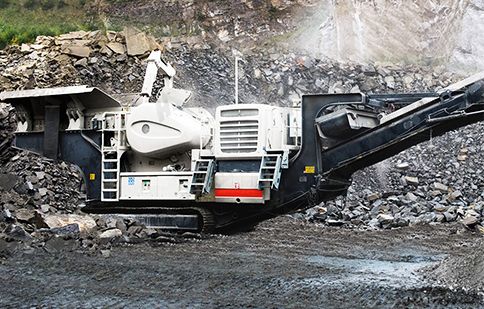
Deep crushing chamber design for higher output
Optimized chamber structure improves material throughput, increasing capacity by up to 10% with more stable crushing performance.
-
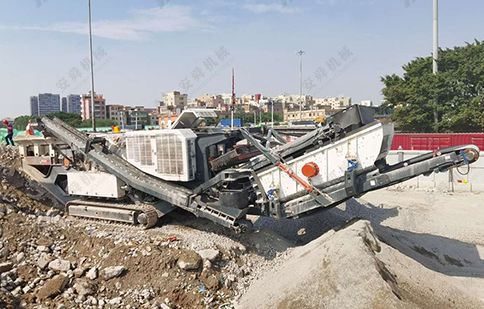
Fuel-efficient power system (up to 25% savings)
Equipped with a high-performance Cummins diesel engine, offering low fuel consumption, low noise, and reliable operation even in extreme -40°C environments with cold-start preheating system.
-
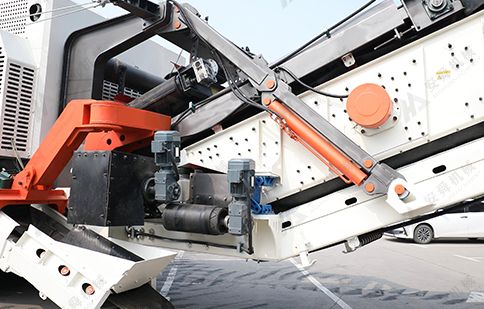
Dual power system (diesel + electric)
Flexible operation in different working conditions, ensuring higher stability, safety, and continuous production with lower energy cost.
-
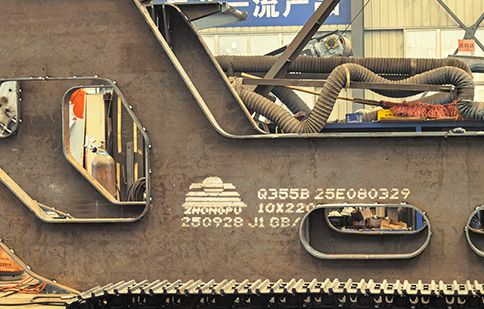
Intelligent PLC control system
Real-time monitoring of machine status, easy operation via user-friendly interface, and automatic protection functions for safer and more efficient running.
-
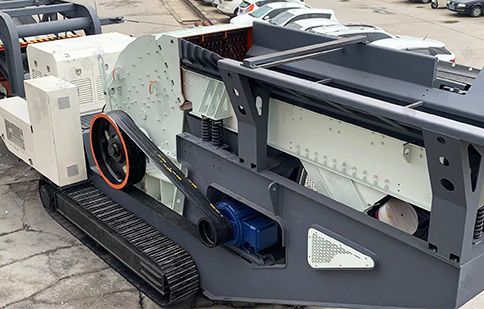
Hydraulic-driven adjustment system
Fast and convenient control of conveyor height and discharge opening, improving operational efficiency and reducing downtime.
-
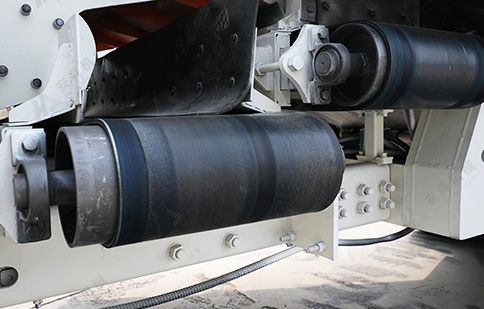
Strong mobility for any job site
Crawler-type chassis enables easy relocation on rough terrain, reducing transport cost and allowing fast deployment in different working environments.
-
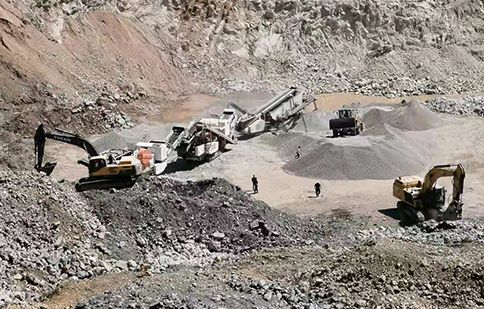
Pre-screening system reduces cost
Integrated vibrating feeder with grizzly bars and two-stage screening removes soil and fine materials before crushing, reducing main crusher load and improving final product quality.
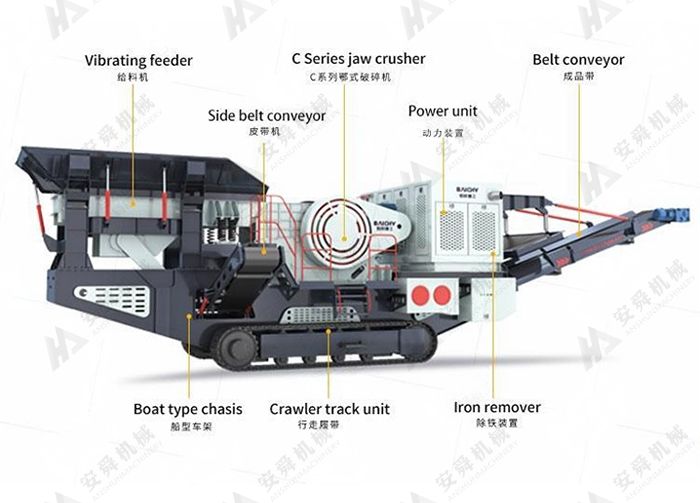
What Is the Working Principle of the Crawler Jaw Crusher Plant?
The vibrating feeder meters feed material from the hopper into the jaw crusher at a controlled rate. The jaw crusher reduces the feed by compressing material between a fixed jaw plate and an eccentric-driven swing jaw. Crushed product discharges onto the main conveyor, which passes under the RCYQ-13 magnetic separator to remove ferrous metal before delivering the product to a stockpile or secondary crusher.
Clay and fine undersized material that falls through the crusher discharge area is collected by the soil-removal conveyor and stockpiled separately. The complete sequence - feed, crush, separate, convey - runs continuously under motor drive, with all systems powered by the on-board generator and monitored through the Schneider control cabinet.
When relocation is needed, the operator folds the hopper and discharge conveyor hydraulically, retracts the support legs, and drives the plant on its crawler tracks to the new position. No dismantling or crane lifting is required.
Get Quote
FAQ
How Does a Crawler Plant Differ from a Wheeled Mobile Crusher?
A crawler plant travels on steel tracks under its own hydraulic power and requires no road access or towing vehicle. It can operate on unprepared quarry floors, soft ground, and steep grades where wheeled units cannot. Wheeled mobile crushers are faster to transport between distant sites on public roads but need a flat, stable surface to operate and a towing vehicle to relocate.
Can the Plant Operate on Slopes?
The hydraulic crawler undercarriage supports safe travel and operation on grades up to approximately 25–30°, depending on ground conditions. The boat-type low-centre-of-gravity frame improves stability. For sustained operation on steep cross-slopes, please consult our application engineers before selection.
How Often Does the Generator Need Refuelling?
At full-load operation, the 300 KW generator set typically consumes 55–70 litres of diesel per hour. A standard fuel tank provides 8–12 hours of continuous operation per fill. Actual consumption depends on crusher load, conveyor speed, and ambient temperature. A fuel level alarm is included in the standard electrical panel.
What is the CSS Adjustment Range on the Jaw Crusher?
CSS range depends on the specific SC-series jaw crusher model fitted. As a guide, the SC96–SC120 series supports a CSS range of approximately 60–150 mm, adjustable via rear wedge while the machine is stopped. Hydraulic CSS adjustment is available as an option for applications requiring frequent product size changes.
Is Remote Monitoring Available?
An optional remote monitoring module can be added to the Schneider control cabinet, providing real-time data on crusher load, conveyor speed, generator output, and fault codes via a mobile app or web dashboard. This is recommended for operations where the plant runs unattended during shift changes or in remote locations.