English

Screw Sand Washing Machine
Model: LSX Series · Sand Washing · Sand & Aggregate
-
Feed Size
≤10mm
-
Capacity
15-280t/h
-
Power
7.5-60kw
- IOS9001
- CE
- EAC
We reply within 24 hours
Product Overview
What Is a Screw Sand Washing Machine?
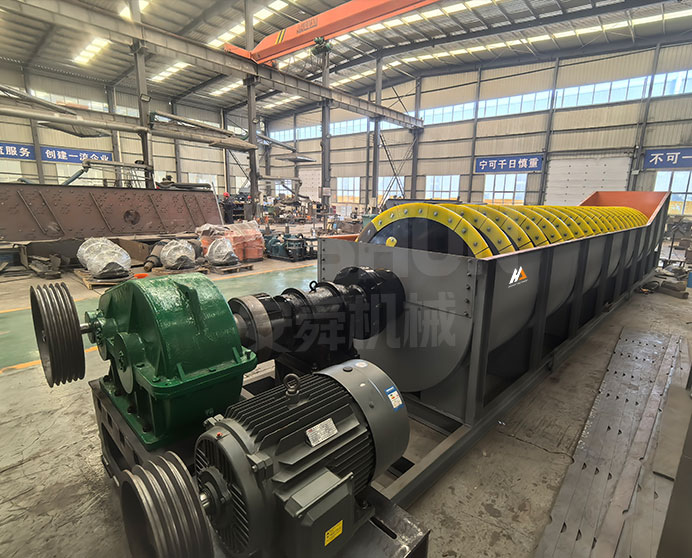
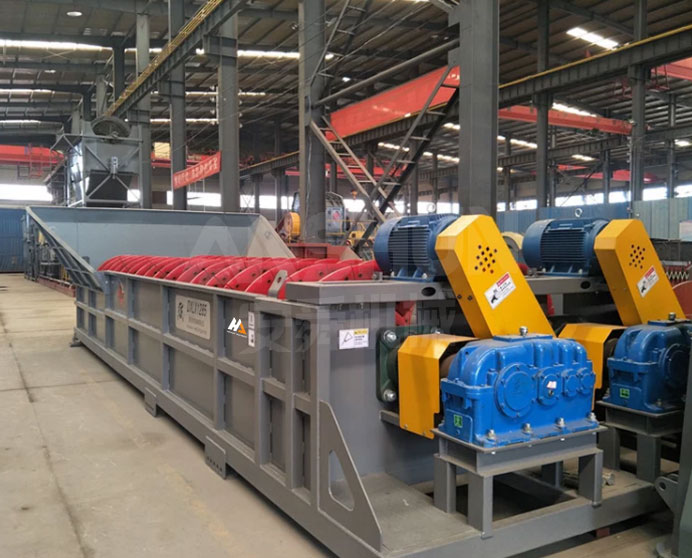
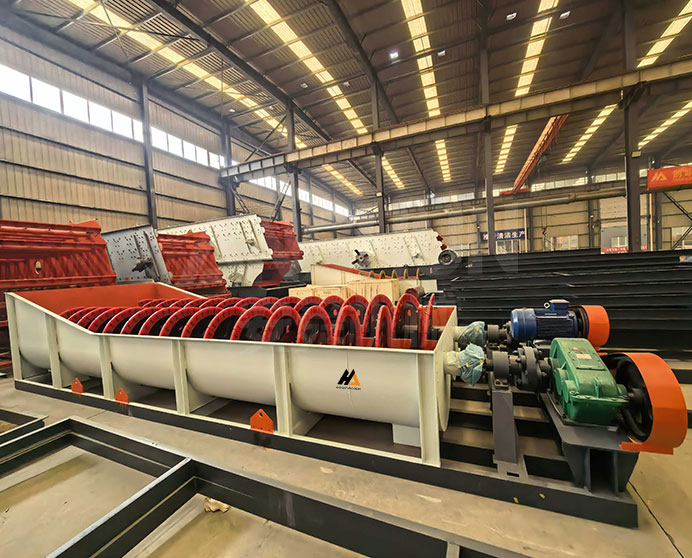
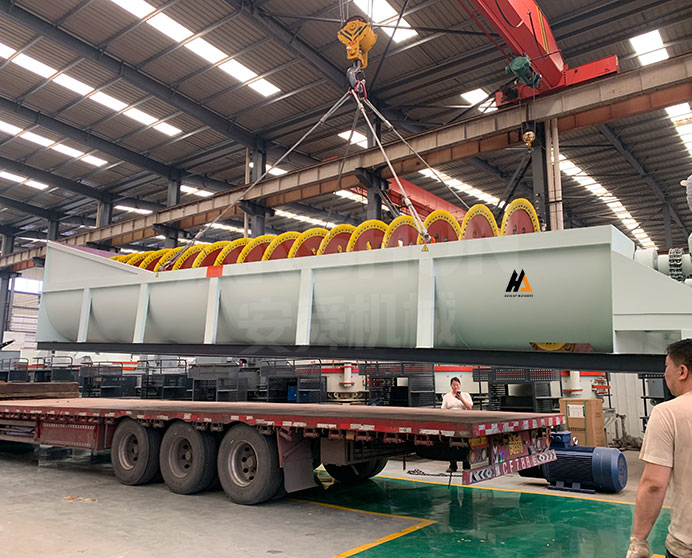
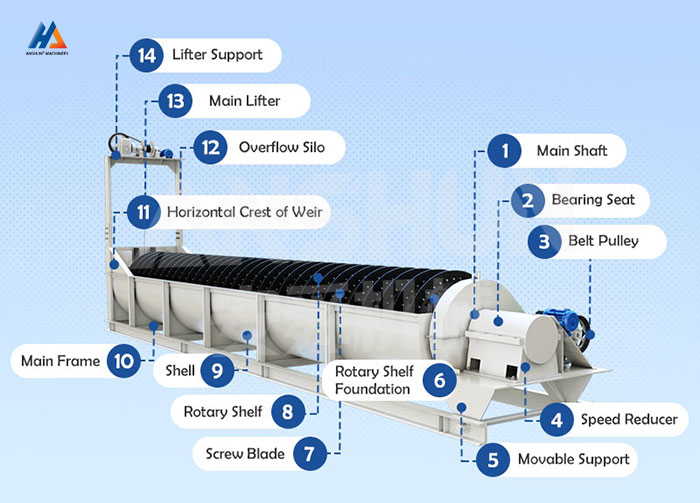
The LSX / 2LSX screw sand washing machine is a helical-flight inclined-trough washer designed to clean 0–10 mm fine aggregate before it enters concrete, asphalt, or dry-mortar production. Feed material enters the lower end of the inclined steel tub, where the rotating screw conveys and agitates the sand through the wash water, breaking apart clay lumps and releasing fine silt and organic impurities. Clean sand is transported up the incline, drained, and discharged at the upper end; contaminated wash water overflows the adjustable weir at the rear.
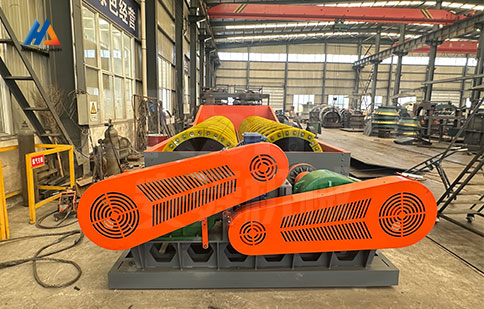
The lineup covers eight standard models: four single-screw LSX units (LSX760 through LSX1575) for 15–120 t/h, and four twin-screw 2LSX units (2LSX1500 through 2LSX3000) for 60–280 t/h. The twin-screw configuration doubles throughput with two parallel screws in a shared tub – the preferred solution for high-capacity aggregate plants where a single large-diameter washer would exceed practical equipment dimensions.
Applicable Materials
River sand, Sea sand, Mountain sand, VSI manufactured sand, Granite crusher fines, Limestone crusher fines, Recycled concrete fines, Quartz sand, Feldspar sand
Industries
Aggregate & Concrete Sand Production, Quarry Manufactured-Sand Plant, Ready-Mix Concrete & Mortar Manufacturing, Highway, Railway & Hydraulic Engineering, Glass Raw-Material Processing, C&D Waste Recycling
Technical Specifications
|
Model |
LSX760 |
LSX1075 |
LSX1275 |
LSX1575 |
2LSX1500 |
2LSX2000 |
2LSX2400 |
2LSX3000 |
|
Number of Screw(Pcs) |
1 |
1 |
1 |
1 |
2 |
2 |
2 |
2 |
|
Screw Diameter(mm) |
750 |
1000 |
1200 |
1500 |
750×2 |
1000×2 |
1200×2 |
1500×2 |
|
Tub Length(mm) |
6000 |
7500 |
7500 |
7500 |
6000 |
7500 |
7500 |
7500 |
|
Feeding Size(mm) |
≤10 |
≤10 |
≤10 |
≤10 |
≤10 |
≤10 |
≤10 |
≤10 |
|
Capacity(t/h) |
15-30 |
30-50 |
50-80 |
80-120 |
60-80 |
80-150 |
150-220 |
180-280 |
|
Screw Speed(r/min) |
18 |
18 |
16 |
16 |
18 |
18 |
16 |
16 |
|
Required Power(kw) |
7.5 |
15 |
18.5 |
30 |
7.5×2 |
15×2 |
18.5×2 |
30×2 |
Key Features & Advantages
-
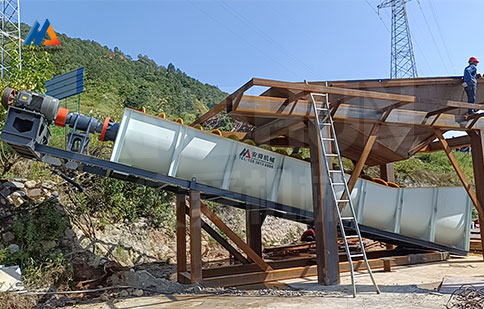
Double-Spiral Impeller Design
Single-screw (LSX) and twin-screw (2LSX) configurations share the same helical-flight geometry, delivering thorough agitation and stratified washing across the full capacity range from 15 t/h to 280 t/h.
-
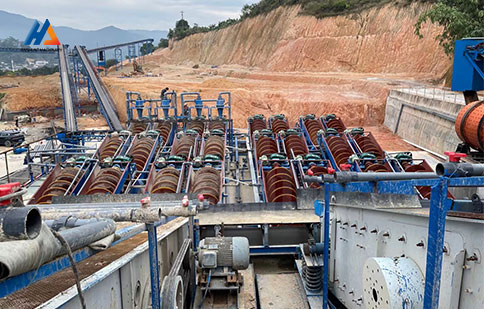
Sealed, Grease-Lubricated Bearings
All bearing housings are isolated from the slurry environment by multi-stage lip seals and packed with high-consistency grease, eliminating water ingress and extending maintenance intervals well beyond open-housing competitor designs.
-
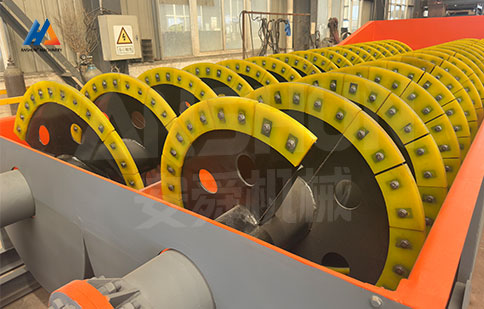
Adjustable Discharge Weir
The height-adjustable overflow weir at the rear of the tub allows operators to set the balance between fines recovery and wash cleanliness without stopping the machine - critical for meeting varying product specifications across shifts.
-
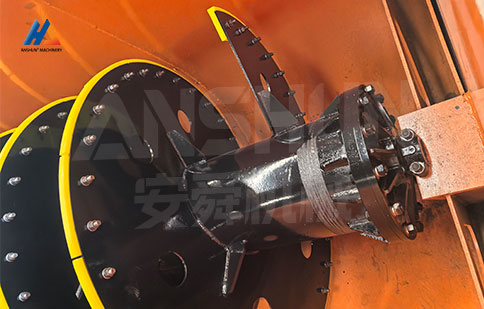
Low Screw Speed, High Torque Drive
Operating at only 16–18 r/min, the screw exerts gentle mechanical action on the sand, preserving grain shape and reducing breakage. The high-reduction gearbox transmits torque efficiently with minimal heat generation and low noise.
-
Robust Welded-Steel Tub
The tub is fabricated from heavy-gauge structural steel and internally lined at the wear zones. All external structural members are corrosion-treated. Long 6000–7500 mm tub lengths provide extended retention time for thorough washing of high-clay feeds.
What Is the Working Principle of the Screw Sand Washing Machine?
Feed sand enters the lower end of the inclined tub through the feed box and falls into the water-filled washing zone. The motor drives the screw shaft through the high-reduction gearbox, rotating the helical flight at 16–18 r/min. As the flight rotates, it agitates the sand–water slurry, breaking apart clay balls and suspending fine silt and organic particles in the wash water. The helical geometry simultaneously conveys the sand upward along the tub at a controlled rate.
As sand moves up the incline above the waterline, excess water drains back through the flight gaps into the wash zone. The sand continues to the elevated discharge lip and falls onto the product conveyor fully drained. Contaminated wash water - carrying suspended silt, clay, and fines - overflows the adjustable weir plate at the rear of the tub and drains to the settling system. Raising the weir retains finer material in the product stream; lowering it increases fines rejection. The sealed bearing assemblies at both ends of the screw shaft prevent water ingress throughout continuous operation.
Get QuoteFAQ
Is On-Site Commissioning Support Available?
Remote commissioning support via video call is included at no charge. On-site engineer dispatch is available as an optional paid service – lead time and cost depend on location. Please discuss before purchase.
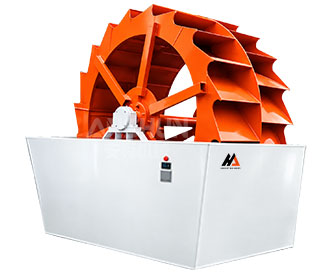
How Does a Screw Sand Washer Differ from a Wheel (Bucket-Impeller) Sand Washer?
A screw washer uses a rotating helical flight to convey, agitate, and drain sand along an inclined tub. It handles higher feed rates and is better suited to feeds with high clay or silt content requiring extended agitation. A wheel washer uses a large-diameter impeller with lifting buckets and is gentler on the product, with slightly lower fines loss. For coarse-sand or light washing duties at moderate capacity, a wheel washer may be preferred; for high-capacity or high-contamination feeds, the screw washer is the standard choice.
What is the Expected Fine-Sand Loss Through the Overflow?
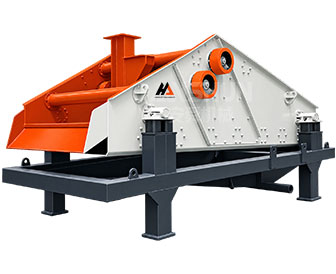
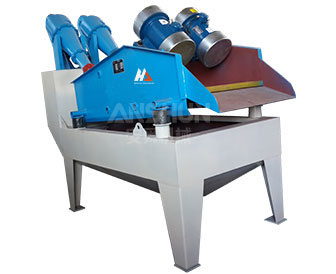
At standard weir setting, the LSX / 2LSX series loses approximately 8–18% of the sub-0.15 mm fraction. For applications where fine-sand recovery is commercially important, pair the screw washer with a fine-sand recovery system (hydrocyclone bank plus dewatering screen) on the overflow stream to capture and dewater the fines before they enter the settling pond.
What is the Difference Between a Single-Screw (LSX) and a Twin-Screw (2lSX) Sand Washer?
Single-screw LSX models use one helical flight in a single tub, covering 15–120 t/h. Twin-screw 2LSX models place two parallel screws in a shared tub, roughly doubling throughput to 60–280 t/h for the same footprint length. Both share the same mechanical architecture and spare parts – only the tub width and drive count differ, simplifying inventory for plants that run both types.